


Greater Boston Commercial Real Estate
Two Historic Greater Boston Theaters Hit the Market for $12 Million Each
The buildings housing the Somerville Theatre and Capitol Theatre are for sale, raising an unusual commercial real estate question: What happens when the property changes hands, but the cultural institution inside remains?
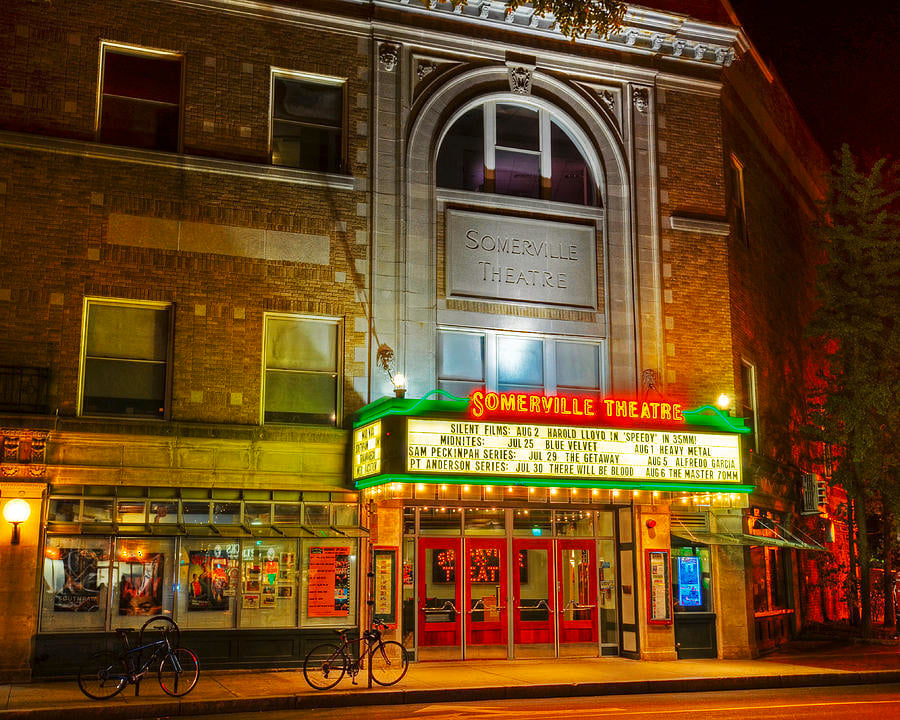
Two of Greater Boston’s best-known independent movie theaters are at the center of an unusual commercial real estate offering—but the theaters themselves aren’t actually what’s for sale.
The buildings housing the Somerville Theatre in Davis Square and the Capitol Theatre in East Arlington have each been listed for $12 million as part of a three-property portfolio being marketed by Hunneman. The offering also includes the 44-unit Bryant Chambers apartment building at 36 College Avenue in Somerville.
Together, the Arlington–Somerville Portfolio comprises more than 130,000 square feet, 10 commercial suites and 61 apartments across three properties. The Fraiman family has owned and operated the portfolio for more than four decades, and Hunneman says this is the first time it has been offered to the market.
The sale presents an unusual question for Greater Boston commercial real estate: What happens when the buildings housing beloved cultural institutions change hands, while the businesses inside them remain?
Somerville Theatre Building
$12 MillionLocation: 49–55 Davis Square, Somerville
Historic theater, Crystal Ballroom, restaurant and commercial space in the heart of Davis Square.
Capitol Theatre Building
$12 MillionLocation: 202–218 Massachusetts Avenue, Arlington
Historic theater with commercial suites and 18 residential apartments.
The Theaters Are Staying—At Least for Now
The distinction between the theater businesses and the underlying real estate is important.
For decades, the Fraiman family owned both the properties and the businesses operating inside them. Melvin Fraiman acquired the Capitol Theatre in 1979 and the Hobbs Building, home of the Somerville Theatre, in 1984.
That arrangement began to change in 2025, when longtime theater employees took over operations through CSB Theatres, short for Capitol Somerville Ballroom. The group acquired the operating business while the Fraiman family retained ownership of the real estate.
The result is that the theaters now operate as tenants in the buildings being offered for sale.
According to recent reporting, CSB is in the second year of five-year leases at both theater locations, with options to renew. Those existing leases provide the venues with near-term stability and would remain an important consideration for any prospective buyer.
For an investor, the opportunity therefore isn’t simply the acquisition of two old movie theaters. It’s the acquisition of two unusual mixed-use properties anchored by established entertainment tenants with deep connections to their surrounding communities.
More Than a Movie Theater in Davis Square
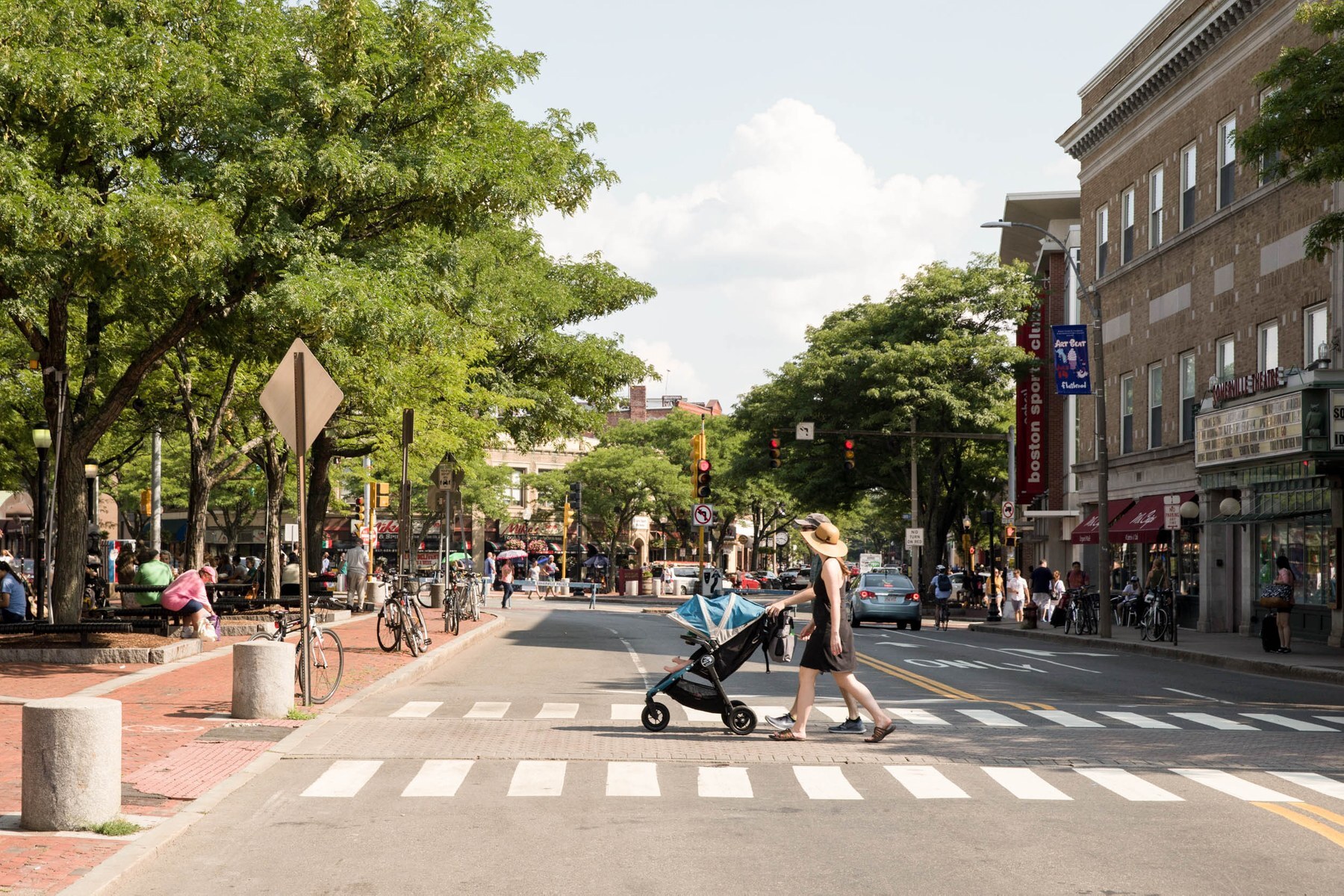
The Somerville Theatre property at 49–55 Davis Square occupies a prominent location in the heart of one of Greater Boston’s most active neighborhood commercial districts.
The historic Hobbs Building dates to the early 20th century, with the Somerville Theatre opening in 1914. Today, the property is anchored by the theater and the restored Crystal Ballroom, a live-event venue that reopened following a major renovation.
The theater remains an active cultural destination, hosting independent and repertory film programming, concerts and events. It is also closely associated with the Independent Film Festival Boston and other recurring cultural programming.
Hunneman’s marketing describes the broader portfolio as combining iconic entertainment venues with stable in-place income and transit-oriented locations. The Somerville property sits in the center of Davis Square, providing immediate access to the neighborhood’s retail and restaurant activity as well as the MBTA Red Line.
The property represents an increasingly rare type of urban commercial asset: an entertainment-anchored building whose value is tied not only to its location and income potential, but also to its role in the identity of the surrounding neighborhood.
The Capitol Theatre Offers a Different Mixed-Use Proposition
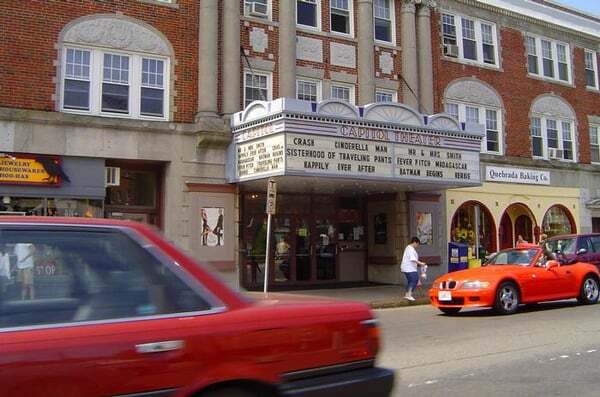
Approximately two miles away, the Capitol Theatre property at 202–218 Massachusetts Avenue in East Arlington presents a somewhat different investment profile.
The roughly 50,000-square-foot block includes the historic Capitol Theatre, several retail spaces and 18 apartments. The residential component gives the property a diversified mix of uses beyond its entertainment anchor.
Like the Somerville Theatre, the Capitol has operated for more than a century and remains an established neighborhood destination.
Together, the two properties demonstrate how older entertainment venues can evolve into anchors within larger mixed-use commercial assets rather than functioning solely as standalone cinemas.
At asking prices of $12 million each, the sale will test investor appetite for properties that combine conventional real estate fundamentals with less conventional entertainment uses.
A Generational Commercial Real Estate Transition
Unlike many recent high-profile commercial property sales, the decision to market the theater buildings does not appear to be primarily driven by financial distress.
Instead, the offering represents a generational transition after more than four decades of family ownership.
According to reporting on the sale, Richard Fraiman is looking toward retirement, while the next generation of the family is not interested in taking over management of the properties. The family has reportedly invested millions of dollars in upgrades to the theaters over the years while seeking to maintain their historic character.
That creates an interesting succession story.
The family found a path to transfer the operating businesses to longtime employees who wanted to preserve the theaters as independent cultural institutions. The underlying real estate, however, still requires an owner.
Now, a new investor could become landlord to the very businesses created to carry the theaters into their next generation.
Historic Properties With Modern Development Pressures
The locations of the two properties add another dimension to the offering.
Davis Square, in particular, is a dense, transit-accessible commercial district where development opportunities are limited and demand for housing remains significant. That could ordinarily make a large, centrally located property attractive for repositioning or redevelopment.
The historic status of the Somerville Theatre property, however, creates additional considerations.
The Hobbs Building is listed on the National Register of Historic Places and is also located within a Local Historic District. Significant exterior architectural changes would therefore be subject to local historic preservation review.
Local officials have also publicly emphasized the theater’s importance to the future of Davis Square, adding another layer of community interest to any potential change in ownership.
The combination of existing leases, historic preservation requirements and strong community interest means that a prospective buyer would be acquiring more than a redevelopment site.
They would also be acquiring a highly visible role in the future of the neighborhood.
For a prospective buyer, these properties represent more than square footage and rental income. They combine commercial real estate investment with the stewardship of two century-old institutions deeply connected to their surrounding communities.
When Cultural Value and Real Estate Value Meet
The offering highlights a challenge that extends beyond these two properties.
Many of Greater Boston’s independent theaters, music venues, restaurants and other cultural institutions operate from real estate that has become increasingly valuable as surrounding neighborhoods have grown and changed.
When the business and the building share the same longtime owner, those competing priorities can sometimes be managed internally. When ownership separates, the relationship becomes more complicated.
For the Somerville and Capitol theaters, existing leases provide stability in the immediate future. The longer-term question will be what type of investor ultimately acquires the buildings—and how that owner balances investment returns with properties whose significance extends beyond their balance sheets.
Hunneman is marketing the properties as part of a portfolio that combines historic entertainment venues, residential units, commercial space and transit-oriented locations. The Fraiman family reportedly prefers to sell the two theater properties together, although separate transactions could be considered.
For investors, that represents a rare opportunity to acquire two established mixed-use assets in supply-constrained Greater Boston communities.
For moviegoers and residents, however, the stakes feel more personal.
The Somerville Theatre and Capitol Theatre have survived more than a century of changes in entertainment, technology and the neighborhoods around them. Their next chapter will depend not only on the people operating the theaters, but also on whoever ultimately owns the buildings they call home.
Explore Greater Boston Commercial Real Estate
Stay informed on the latest trends, transactions and insights shaping commercial real estate across Greater Boston.
Explore ABG Realty