

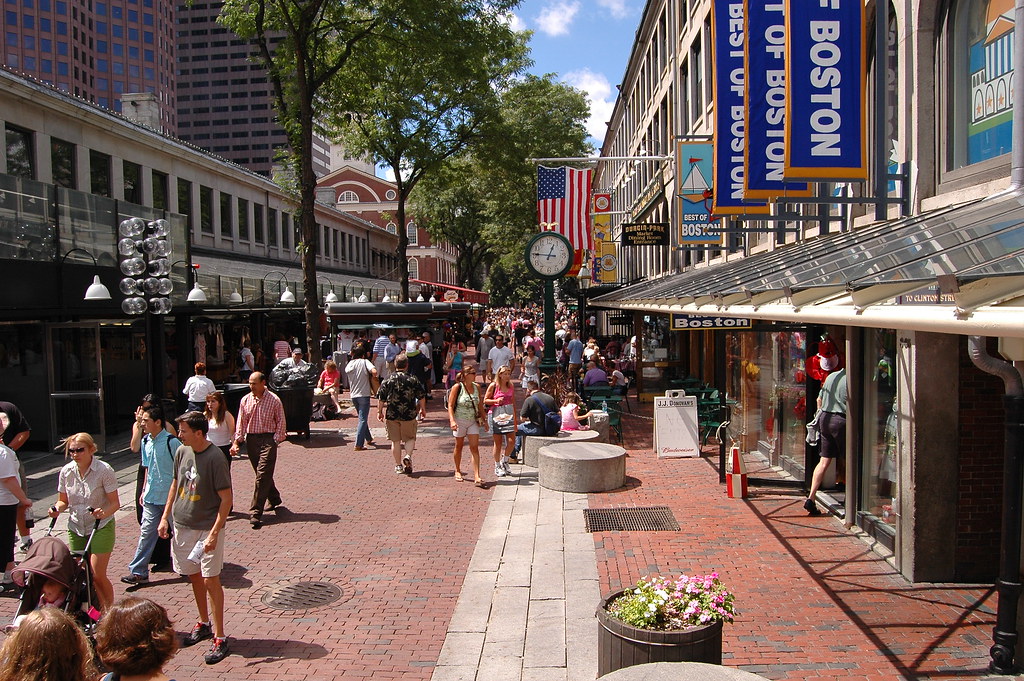

Greater Boston’s retail real estate market is entering the second half of 2026 with limited available space, resilient rent growth, and continued interest from retailers looking to expand throughout the region. While economic uncertainty and slower leasing activity have created some challenges, the market’s constrained supply continues to support relatively strong fundamentals.
For tenants, property owners, and investors, the current environment presents a market where location, property quality, and adaptability remain especially important. Boston’s overall retail vacancy rate stands at just 2.6%, while the availability rate is approximately 3.1%, leaving businesses seeking new locations with relatively few options. At the same time, changing consumer habits and new retail concepts are influencing which properties attract the most demand.
Here are some of the key trends shaping Greater Boston’s retail real estate market in 2026.
Limited Retail Availability Continues to Shape the Market
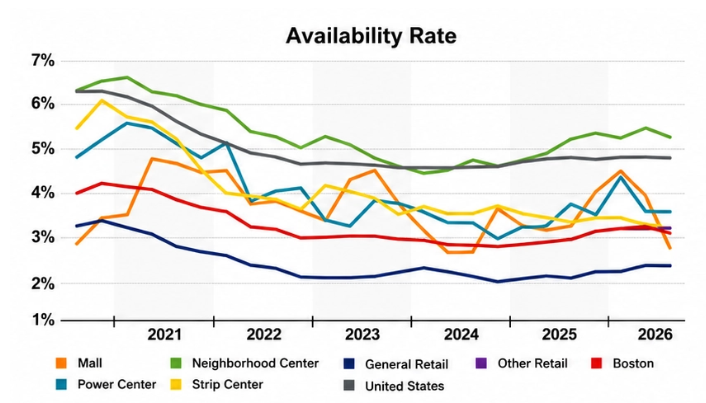 One of the most significant factors influencing Boston retail real estate is the limited amount of space available to tenants.
The region’s 3.1% retail availability rate remains well below the national average of 4.8%. Boston also has one of the lowest availability rates among the 50 largest retail markets in the country.
This limited supply has helped stabilize the market even as leasing demand has moderated. Over the past year, approximately 500,000 square feet of retail inventory was removed from the market on a net basis, largely due to demolitions and the removal of older or underutilized properties.
For tenants, this means finding the right space may remain competitive, particularly for businesses seeking larger footprints or locations in established retail corridors. For property owners, limited availability can help support occupancy and rental rates, especially for well-positioned properties that meet the needs of today’s retailers.
Retail Rents Remain Resilient
Limited supply is also supporting continued rent growth across Greater Boston.
Overall market asking rents are approximately $29 per square foot, representing a premium of nearly 12% compared with the national average of approximately $26 per square foot. Boston retail rents have increased 2.5% over the past year and nearly 7% cumulatively over the past three years.
Rent trends vary considerably depending on property type and location. Some suburban markets west of Boston, including Framingham and Natick, have recorded annual rent growth exceeding 4.5%. Portions of the I-95 corridor have also experienced relatively strong gains.
Meanwhile, urban markets including the Financial District and Back Bay have recorded annual rent growth above 4%.
For tenants evaluating potential locations, these differences highlight the importance of looking beyond metro-wide averages. Rental conditions can vary significantly between individual submarkets and property types.
Retailers Are Still Expanding, But Demand Is Changing
Despite slower overall leasing activity, retailers continue to pursue opportunities throughout Greater Boston.
Grocery stores remain an important source of demand. Big Y, for example, has announced new Eastern Massachusetts locations, including plans to occupy approximately 46,000 square feet at a former Amazon Fresh location in Saugus.
Experiential retail concepts are also playing an increasingly visible role in the market. Entertainment and hospitality businesses that combine activities with food and beverage offerings have continued to expand. Recent examples include Swingers, which opened a 21,000-square-foot mini-golf and entertainment venue in Back Bay, and Ballers, which opened a roughly 30,000-square-foot pickleball and padel complex in the Seaport.
Traditional retailers are expanding as well. UNIQLO opened a new 26,000-square-foot location on Washington Street, while lifestyle retailer Teso Life signed a lease for approximately 20,000 square feet nearby.
These transactions reflect a broader shift in retail demand. Successful retail properties increasingly serve as destinations rather than simply places to purchase goods. Grocery, dining, entertainment, fitness, and other experience-oriented uses can generate consistent foot traffic and help reposition properties as consumer preferences evolve.
ABG Commercial Facilitates Sale of Former Party City Property
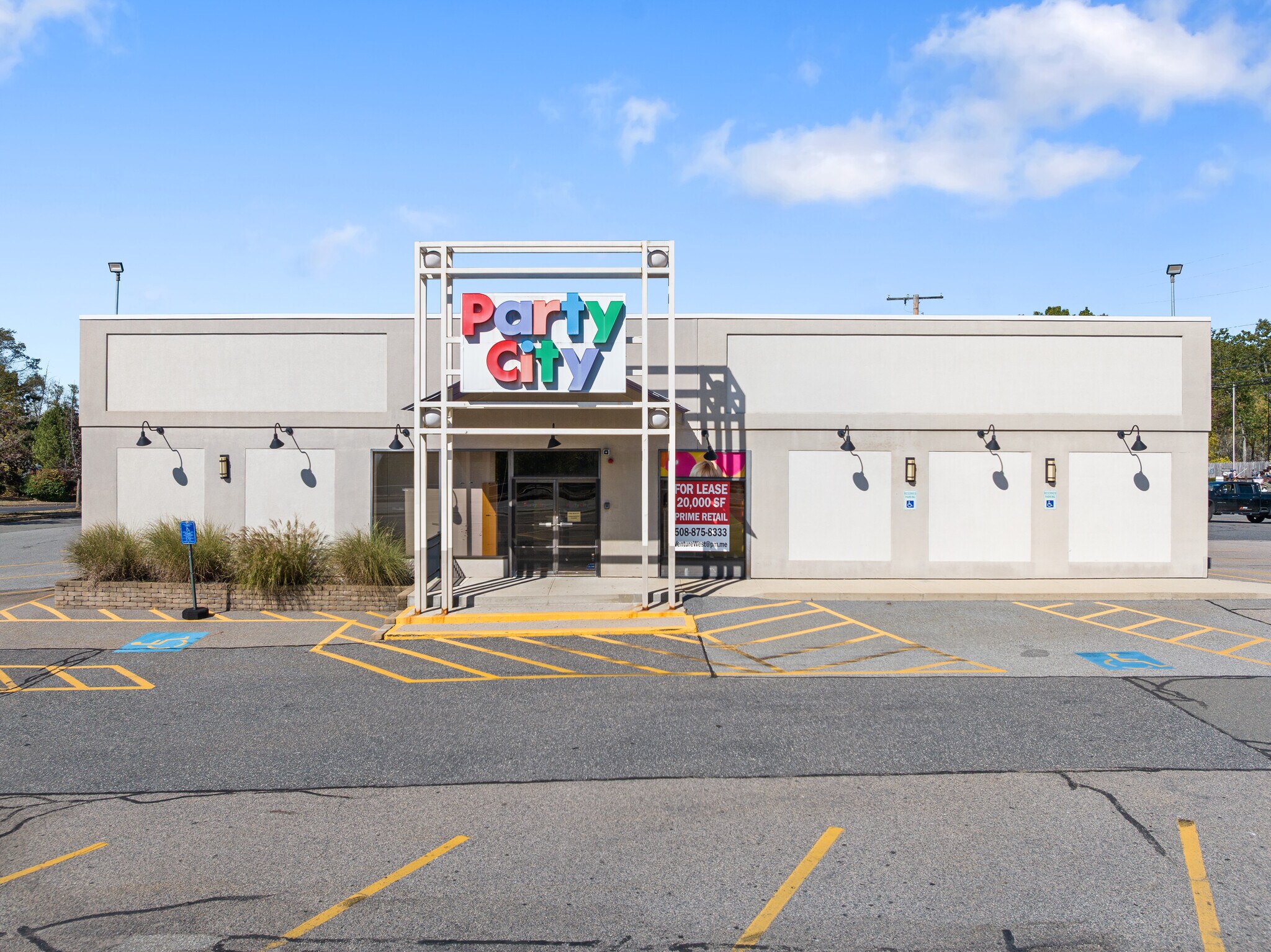 Former Party City retail building located at 321 Worcester St, Natick MA.
Recent transaction activity also illustrates the continued demand for well-located retail properties across Greater Boston. ABG Commercial Realty recently facilitated the $7.25 million sale of the former Party City property at 321 Worcester Street (Route 9 West) in Natick, Massachusetts. The 20,300-square-foot retail property was sold by PEC Realty LLC to Empire Management Corporation, with Bernard Gibbons, Senior Vice President at ABG Commercial Realty, representing the buyer in the transaction.
The sale provides a timely example of investor interest in established suburban retail corridors. Located along Route 9 West, the property offers strong visibility, access, on-site parking, and a flexible layout that can accommodate a variety of retail and service uses.
The transaction is particularly notable within the context of the broader Greater Boston retail market. The Framingham/Natick submarket has experienced some of the region’s strongest recent rent growth, while limited new construction across Greater Boston has increased the importance of existing retail inventory.
As retailers continue to adjust their footprints and consumer preferences evolve, properties formerly occupied by national chains can present new opportunities for investors and owner-users. ABG’s facilitation of the Natick sale demonstrates how strategically located existing properties can attract investment even as the broader retail landscape continues to change.
New Retail Construction Remains Limited
Tenants hoping for a significant influx of new retail inventory are unlikely to see one in the immediate future.
Approximately 640,000 square feet of retail space is currently under construction across the Boston market, representing just 0.3% of total inventory. Much of that pipeline is already committed, with the overwhelming majority of space under construction preleased.
High land and development costs continue to make standalone retail construction challenging, particularly closer to Boston’s urban core. As a result, new retail space is increasingly incorporated into larger mixed-use developments rather than built as traditional freestanding projects.
This dynamic could continue to benefit existing retail properties. With relatively little new competition entering the market, well-maintained and strategically located buildings may remain attractive to tenants seeking access to established consumer markets.
Retail Investment Activity Remains Active
Despite higher interest rates and broader economic uncertainty, Greater Boston continues to see retail investment activity.
Approximately $1.7 billion in Boston-area retail properties traded over the past 12 months, encompassing roughly 7.2 million square feet. Transaction volume increased significantly during the first quarter of 2026 compared with the same period in 2025.
Smaller properties have accounted for a significant portion of recent transactions, while larger deals continue to occur as investors evaluate opportunities based on location, tenant stability, redevelopment potential, and long-term value.
In a market where new retail construction remains limited, existing properties can offer investors access to established commercial corridors without the costs and timelines associated with ground-up development. Properties with flexible layouts may be particularly attractive as retail and service businesses continue to adapt their space requirements.
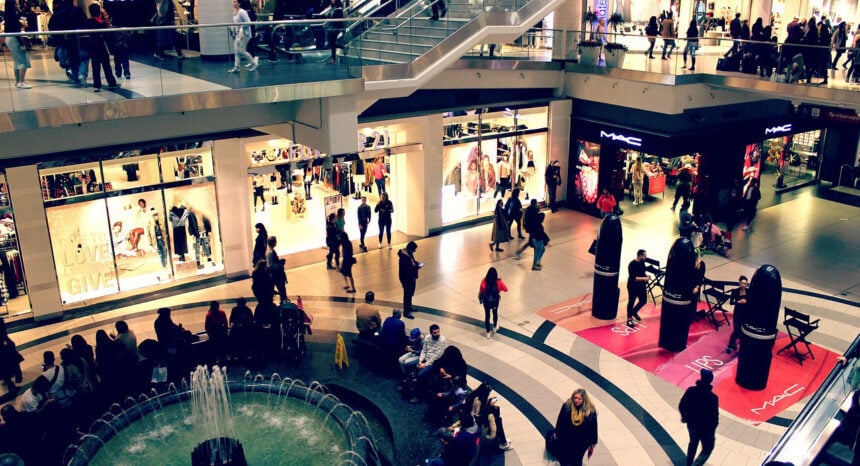 Consumer foot traffic and in-person shopping continue to shape demand for physical retail space.
 What This Means for Tenants and Property Owners
For retail tenants, Boston’s low availability means that planning ahead is increasingly important. Businesses considering expansion, relocation, or lease renewals may benefit from beginning the search process early and evaluating multiple submarkets.
Properties with strong transportation access, visibility, parking, or proximity to established residential and commercial areas may continue to command significant interest. At the same time, opportunities can emerge when former retail locations become available for repositioning or alternative uses.
For property owners and investors, the current market presents a different set of considerations. Limited supply and low vacancy provide a relatively supportive environment, but tenant preferences continue to evolve. Properties capable of accommodating grocery, fitness, entertainment, dining, and other high-traffic uses may be particularly well positioned.
Economic conditions remain an important variable. Slower employment growth, inflation, and changes in consumer spending could affect expansion plans and leasing activity. However, Boston’s constrained development pipeline provides the market with a degree of insulation from significant oversupply.
Looking Ahead at Greater Boston Retail Real Estate
Greater Boston’s retail market in 2026 is defined by a combination of limited supply and changing demand. Vacancy remains low, new construction is constrained, and rents continue to grow even as broader economic conditions create uncertainty.
The result is a market in which both existing properties and newly available spaces can attract attention when they offer the right combination of location, visibility, and flexibility. The recent ABG-facilitated sale of the former Party City property in Natick provides one example of how established retail properties can find new opportunities in a changing market.
For tenants, understanding individual submarkets will be increasingly important when evaluating opportunities. For owners and investors, evolving retail concepts and the repositioning of existing properties may create new possibilities across the region.
For a deeper look at vacancy, rents, leasing activity, construction, sales trends, and individual Greater Boston submarkets, explore ABG Commercial Realty’s Q3 2026 Boston Retail Market Report.