


Image Source: Clare Thompson via Crexi
Greater Boston’s life sciences cluster is often discussed as though it exists almost entirely within Kendall Square and a handful of Boston neighborhoods. While those locations are important, CBRE’s Global Life Sciences Atlas makes clear that the region’s ecosystem is much larger and more operationally diverse than that simplified picture suggests. At this scale, suburban locations are not an alternative to the cluster, but one of the ways it functions.
CBRE describes the Boston–Cambridge life sciences market as the largest life sciences hub in the United States, supported by a substantial workforce and deep institutional infrastructure. Approximately 130,000 people work in the region’s life sciences industry, including nearly 52,000 in research and development roles. Supporting that workforce is just under 56 million square feet of lab and R&D space, underscoring how fundamentally tied scientific work in this market is to specialized, purpose‑built real estate. At the same time, CBRE notes that supply was outpacing demand as of the end of 2024, contributing to elevated vacancy levels across the lab and R&D sector.
Taken together, these conditions point to a market that is broad, complex, and spread across multiple locations. CBRE notes that the Boston–Cambridge life sciences ecosystem includes a wide range of submarkets, each serving different operational needs. In Boston, the Seaport has emerged as a major destination alongside Fenway and Longwood. In Cambridge, Kendall Square remains the industry’s historic center, continuing to attract companies seeking proximity to peers, institutions, and specialized infrastructure.
CBRE also highlights West Cambridge and Watertown as key destinations, offering lower costs than Kendall Square while maintaining convenient access across the region. Beyond the urban core, the firm points out that the suburban market has its largest industry presence in Waltham and Lexington, reinforcing that suburban lab and R&D space is not secondary to the ecosystem, but a core part of how it functions.
There are clear structural reasons this suburban presence continues to make sense. The region is anchored by world‑renowned universities, major healthcare systems, and leading research institutes that support life sciences research and commercialization at a global scale. Capital formation has also been significant, with Boston–Cambridge life sciences companies securing more venture capital than any other global market between 2019 and 2024, alongside substantial levels of public research funding. Together, these forces support a wide range of companies whose real estate needs vary by size, stage, and function.
Against this backdrop, suburban lab and R&D environments function as complements to the urban core rather than substitutes. As the market works through elevated supply and companies remain deliberate in their real estate decisions, the ability to choose locations based on operational needs, flexibility, and cost structure has become increasingly relevant.
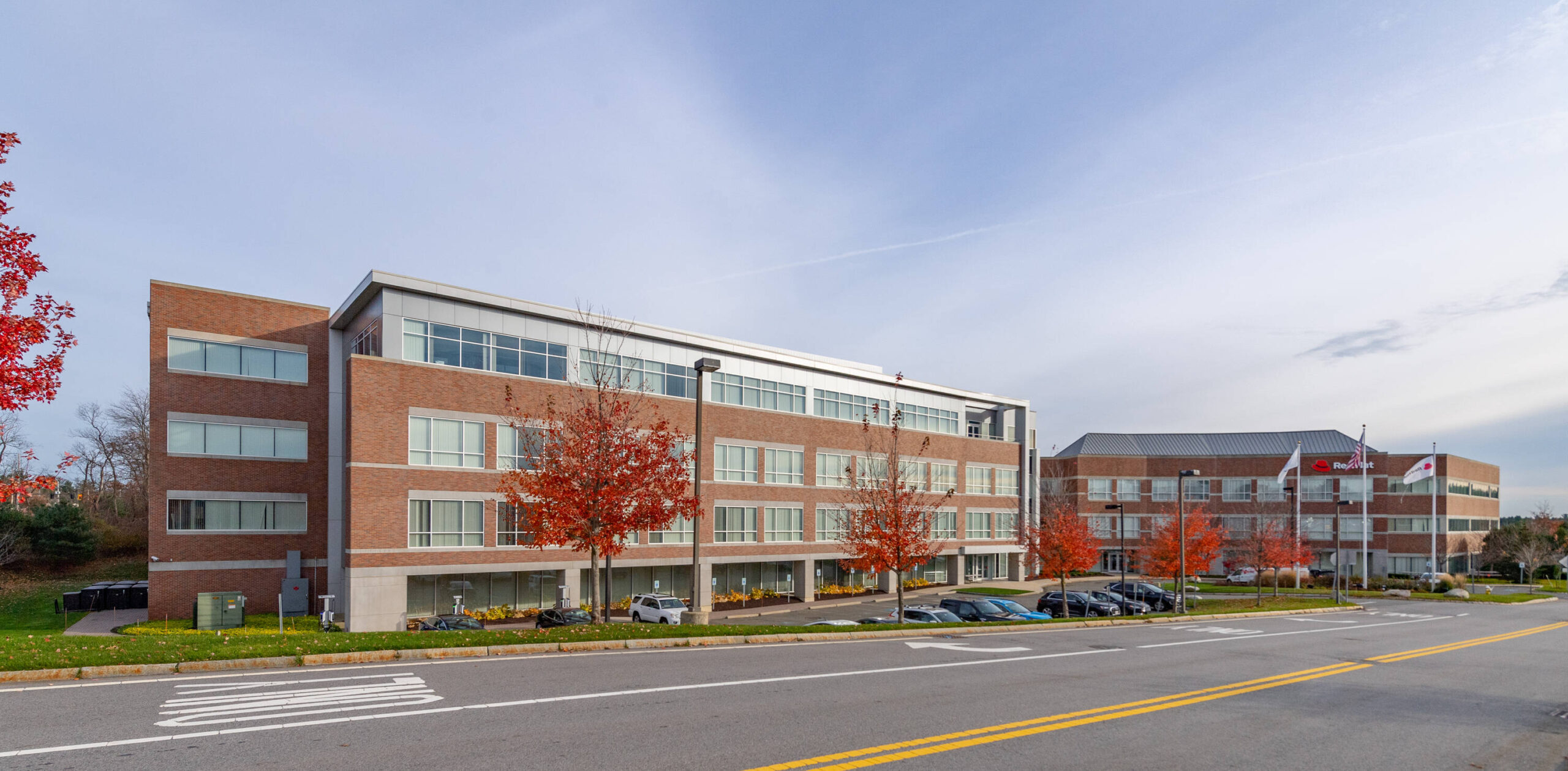
This dynamic is visible locally in the suburban markets west and north of Cambridge. We here at ABG Commercial Realty currently represent a research and development property in Westford that aligns with the suburban lab and R&D profile described by CBRE. Properties like this are real life proof that life sciences work in Greater Boston does not operate from a single location. Instead, suburban lab and R&D space allow companies to function outside the highest‑cost core submarkets while remaining connected to the region’s talent base and research institutions.
For companies thinking about how suburban lab or R&D space fits within a broader strategy, assets like this help explain why markets such as Waltham, Lexington, and surrounding suburban corridors remain active parts of the Boston–Cambridge life sciences landscape.
View the Westford R&D property here.
CBRE’s analysis ultimately reinforces a simple point: the Boston–Cambridge life sciences market is not a single node, but a network. Suburban lab and R&D space remains part of that network because the ecosystem itself is large enough, deep enough, and mature enough to support multiple operating environments.
References
CBRE – Global Life Sciences Atlas: Boston–Cambridge Market Profile