


Greater Boston Commercial Real Estate
From TV Tubes to Real Estate: The Reinvention of a Route 128 Landmark
After 75 years of electronics history, the former You-Do-It Electronics building in Needham is beginning a new chapter as a commercial real estate headquarters and retail destination.
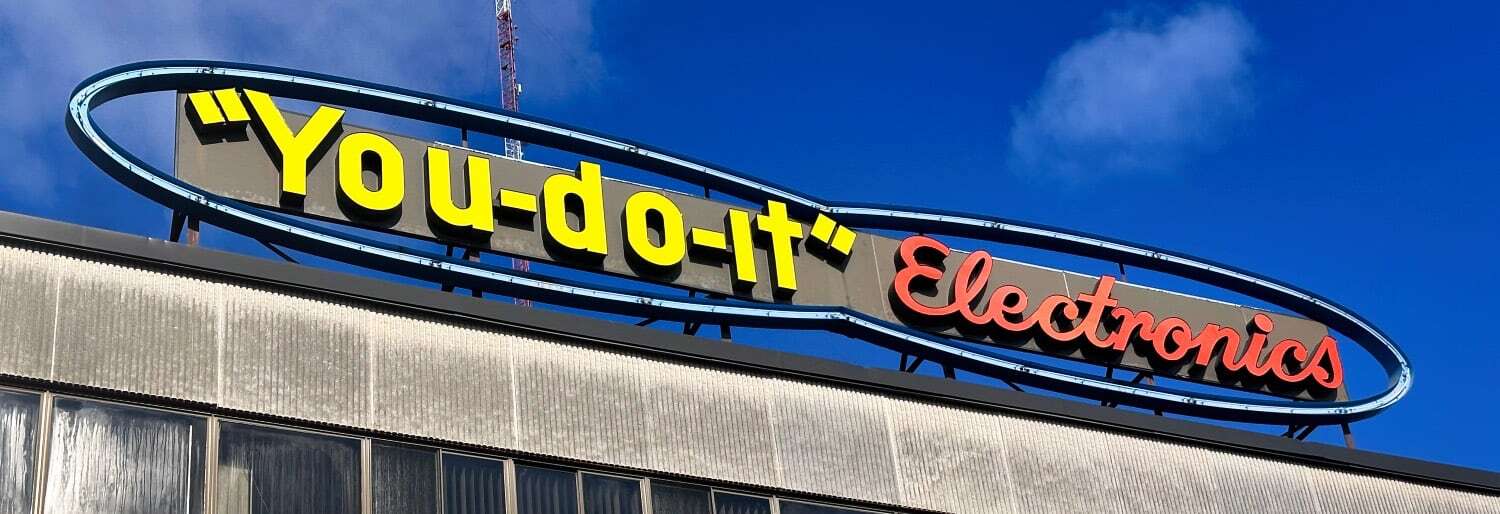
For decades, drivers traveling along Route 128 in Needham have passed a familiar sight: the unmistakable You-Do-It Electronics building and its prominent rooftop sign.
Now, after more than half a century under the same ownership and 75 years of business history, the property at 40 Franklin Street is entering an entirely new era.
In February 2026, Needham-based commercial real estate investment and development firm Onyx Partners acquired the nearly 30,000-square-foot building for $5.7 million, marking the property’s first ownership change since 1971. The company is now repositioning the longtime electronics store as a combination of its own corporate headquarters and new retail space—while preserving one of the building’s most recognizable pieces of history.
40 Franklin Street
The Property by the Numbers
A Business Built Along America’s Technology Highway
The story of You-Do-It Electronics began in 1949, when founder John Ahigian established a television and radio repair business in Boston’s South End.
In 1965, the growing company relocated to a newly constructed, purpose-built store at 40 Franklin Street in Needham.
The timing was fitting. Route 128 was emerging as one of the country’s most important technology corridors, earning a reputation as “America’s Technology Highway” as electronics, computing and defense companies established operations throughout the region.
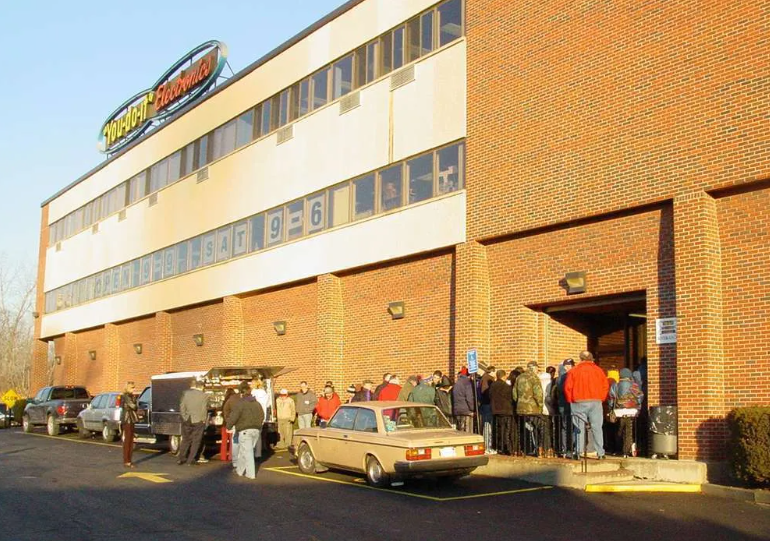
You-Do-It occupied its own niche within that ecosystem. Over the decades, the store became a destination for electronics enthusiasts, engineers, hobbyists and do-it-yourselfers searching for everything from television tubes and electrical components to increasingly modern technology.
The building grew alongside the business. What began as a one-story store was eventually expanded into a four-story property, with retail operations occupying multiple floors alongside office and warehouse space.
But the retail landscape surrounding it was changing.
Big-box electronics stores, online shopping and the transformation of consumer technology gradually changed how and where customers purchased electronic components. You-Do-It’s retail footprint eventually contracted to a single floor before the business closed in June 2024 after 75 years.
The closure left behind something increasingly rare along Route 128: a highly recognizable, independently owned commercial property that had been associated with essentially one business for generations.
Adaptive Reuse
One Building, Two Eras
 Then
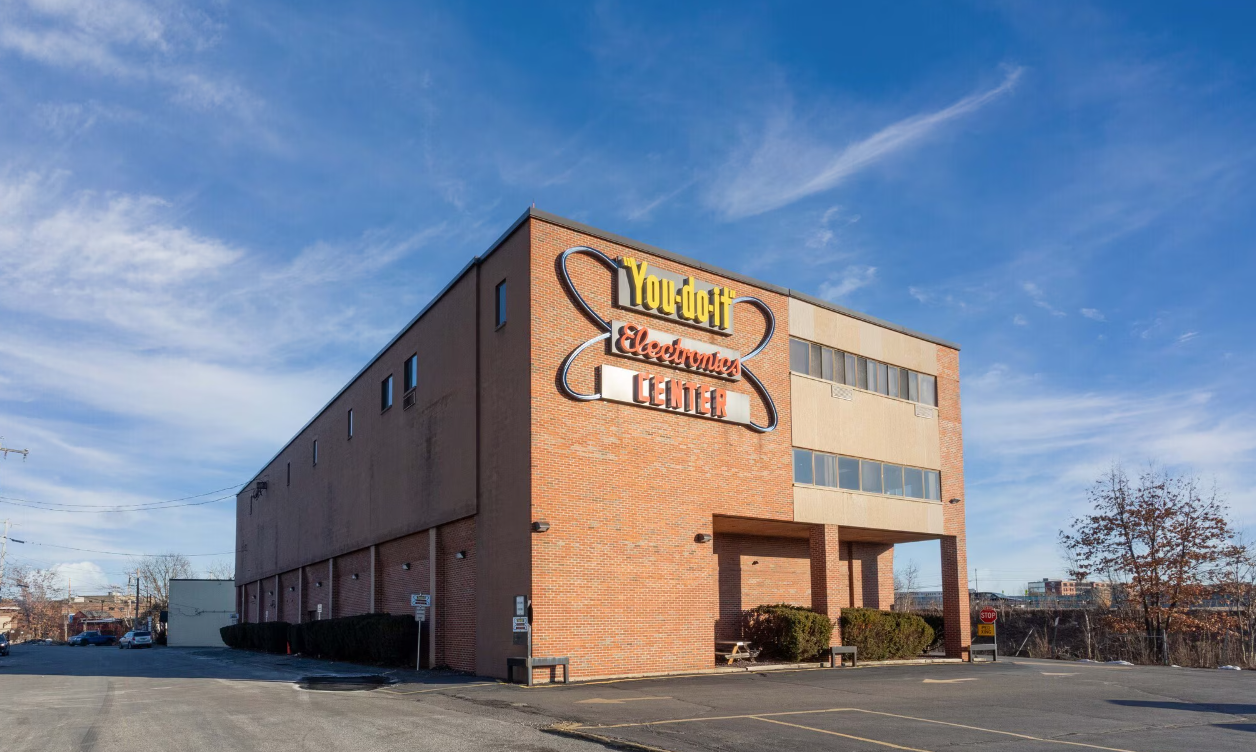
Then
- Electronics and components retail
- Office space
- Warehouse and storage space
- 75 years in business
 Now
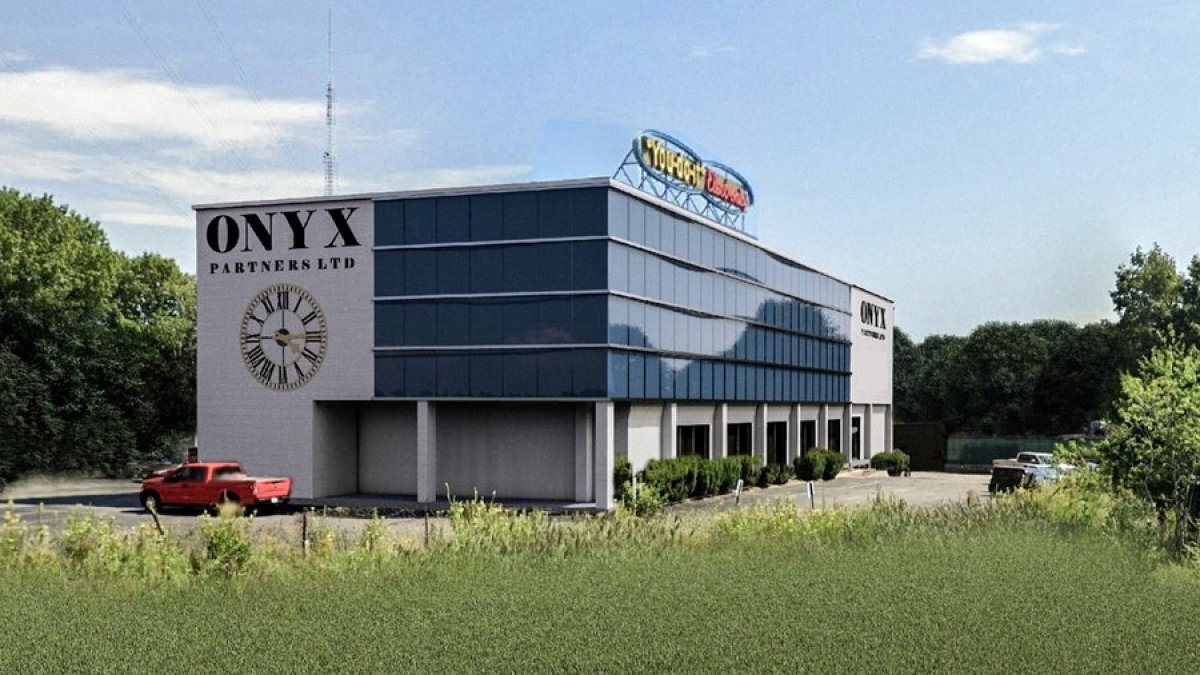
Now
- Pure Hockey retail location
- Onyx Partners headquarters
- Modernized building systems
- Iconic rooftop sign preserved
A $5.7 Million New Chapter
In February 2026, Onyx Partners acquired 40 Franklin Street for $5.7 million in a transaction brokered by Newmark.
The sale reportedly represented the property’s first ownership change since 1971, ending roughly 55 years of continuous ownership.
At approximately 29,900 square feet, the purchase equates to roughly $191 per square foot based on the reported building size. Onyx also secured $6.6 million in financing from Dedham Institution for Savings in connection with the property and its redevelopment.
The acquisition is more than a traditional investment for Onyx. The developer plans to make the building its own long-term headquarters, converting the upper two floors into modern office space while upgrading the property’s building systems, interiors and exterior.
Rather than demolishing the longtime landmark and starting over, the redevelopment is intended to modernize the property while retaining elements of its mid-century character.
For a building that has evolved repeatedly over its six-decade history, the project represents another transformation rather than a complete reset.
Inside the Redevelopment
How 40 Franklin Street Is Being Reused
Retail Below. Headquarters Above.
The redevelopment gives the longtime electronics property a new commercial mix while retaining the building itself.
Pure Hockey is expected to occupy the ground-floor retail space, while Onyx Partners plans to establish its long-term headquarters on the building’s upper two floors.
Diagram is illustrative and represents publicly reported uses. It is not intended as an architectural floor plan.
Retail Returns to 40 Franklin Street
The redevelopment will also preserve something else from the building’s past: its role as a retail destination.
The ground floor has been leased to Pure Hockey, a Massachusetts-based hockey retailer with more than 100 locations nationwide. The store is expected to open in late summer 2026.
The result is an interesting evolution for the property.
A building once organized around electronics retail, offices and warehouse space is being repositioned for a new generation of commercial use—with a national retailer downstairs and a Greater Boston real estate firm establishing its headquarters above.
It is adaptive reuse in a relatively understated form. The building’s purpose is changing without erasing the structure that made the property recognizable in the first place.
Preserving a Piece of Route 128 History
Perhaps no feature of 40 Franklin Street is more recognizable than the You-Do-It sign perched above the building.
Despite the company’s closure, part of that identity is expected to remain.
Onyx has said it plans to preserve the rooftop sign as part of the property’s redevelopment, allowing one of Needham’s most recognizable roadside landmarks to survive even as the building beneath it takes on an entirely new use.
The property’s signage is still evolving. Onyx and Pure Hockey have sign applications scheduled to go before Needham’s Design Review Board in late July, while the future of another large You-Do-It sign previously displayed on the building has also attracted interest.
How much of a commercial building’s identity should survive after the business that defined it is gone? At 40 Franklin Street, the answer appears to be a balance between preservation and reinvention.
The electronics may be gone. The family business has closed. The building has a new owner and new occupants.
But the landmark itself isn’t disappearing.
The Next Chapter for a Route 128 Landmark
The transformation of the former You-Do-It Electronics property is a relatively small redevelopment compared with the massive mixed-use projects reshaping other parts of Greater Boston.
But its history gives the project a significance beyond its square footage.
The building opened as Route 128 was emerging as a center of America’s technology industry. It expanded as its family-owned electronics business grew, adapted as the retail industry changed and remained standing as the technology economy surrounding it evolved.
Now, more than 60 years after You-Do-It first opened its doors in Needham, the same building is adapting again.
A commercial real estate developer will work upstairs. A national retailer will operate downstairs. And above them, if plans move forward as expected, the old You-Do-It sign will remain a reminder of the business that occupied the property for generations.
For a building that spent decades helping customers repair and rebuild things rather than throw them away, adaptive reuse may be a particularly fitting next chapter.
Explore Greater Boston Commercial Real Estate
Stay informed on the developments, transactions and trends shaping commercial real estate across Greater Boston.
Explore ABG Commercial