

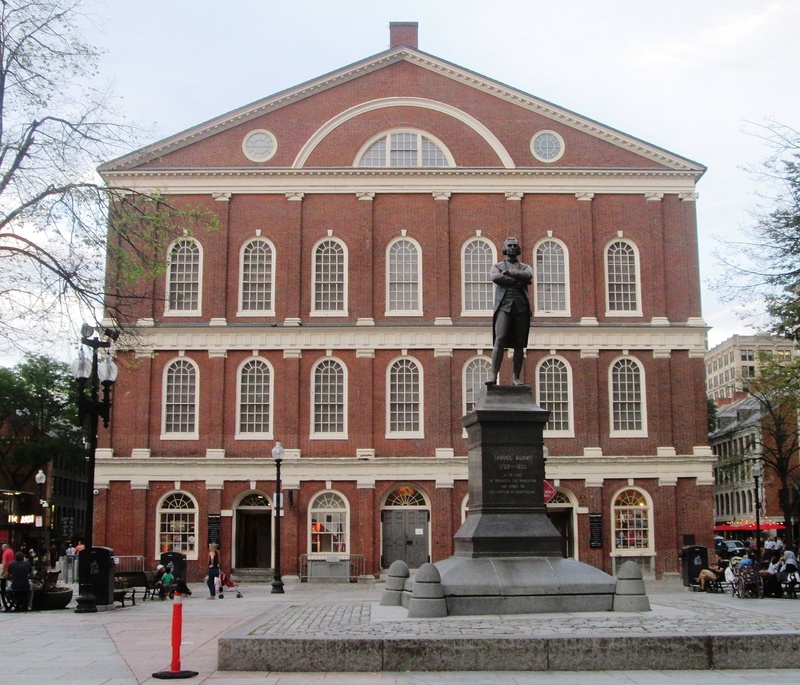

In November 2020, Boston officials appeared ready to take an extraordinary step: remove the private landlord operating Faneuil Hall Marketplace.
Ashkenazy Acquisition Corporation had missed $2.1 million in required payments to the City of Boston while businesses inside the marketplace struggled through the pandemic-driven collapse in tourism and consumer spending. The Boston Planning & Development Agency issued a notice of default, warning that it reserved the right to terminate the company’s long-term ground lease.
Ashkenazy paid the outstanding amount approximately one week later, preventing the monetary dispute from escalating into the landlord’s removal.
The confrontation ended, but it foreshadowed a longer struggle over maintenance, merchant relations, vacancies and control of one of Boston’s most prominent publicly owned properties. That struggle has continued under a new leaseholder and now includes lawsuits seeking more than $2 million from seven current or former marketplace tenants.
The central question is no longer whether Boston will evict Faneuil Hall Marketplace’s landlord. It is whether the city and its private partner can agree on how—and for whom—the marketplace should be rebuilt.
Who Actually Owns Faneuil Hall Marketplace?
The property’s ownership structure is more complicated than its name suggests.
The historic Faneuil Hall building, constructed in the 18th century as a marketplace and meeting hall, is owned by the City of Boston. It is separate from the privately operated commercial marketplace next door.
The neighboring Quincy Market, North Market and South Market buildings are owned by the BPDA and operated under a long-term ground lease. That 99-year agreement dates to 1974–1975 and expires in 2074.
Under the lease, the private operator pays the BPDA only $10 in annual base rent. That figure does not represent the leaseholder’s entire financial obligation: the operator also makes revenue-related payments in lieu of taxes to the city.
In return, the leaseholder controls the commercial property, collects rent from its restaurants, retailers, food stalls and pushcart operators, and assumes responsibility for operating and maintaining the marketplace.
Ashkenazy did not purchase the land or buildings when it took control in 2011. It paid approximately $140 million to acquire the remaining leasehold interest, which had about 63 years left at the time.
The arrangement gives Boston public ownership of the property but limited authority over its daily commercial operations. Marketplace businesses contract with the leaseholder, not directly with the BPDA. Unless the operator violates the ground lease or seeks approval for a major change, city officials cannot easily dictate individual rents, lease terms or tenant selections.
The 2020 Default
The arrangement came under intense scrutiny during the COVID-19 pandemic.
Faneuil Hall Marketplace temporarily closed in March 2020. When it reopened that summer, tourism remained severely depressed and merchants reported dramatic declines in revenue. Ashkenazy deferred certain tenant payments, but businesses and city officials argued that more substantial relief was necessary.
At the same time, Ashkenazy fell behind on its own obligations.
The BPDA’s November 2020 default notice identified two missed payment-in-lieu-of-taxes installments of approximately $1.05 million each. The notice also cited a contractor’s lien that had been placed on the property.
The agency gave Ashkenazy a limited period to address the alleged defaults and reserved the remedies available under the ground lease, including potential termination.
Ashkenazy paid the outstanding $2.1 million approximately one week later. That resolved the immediate monetary dispute, although the original notice had separately raised the contractor’s lien.
The landlord remained in place, but the episode exposed a deeper conflict among Ashkenazy, marketplace merchants and the city.
Merchants Took Ashkenazy to Court
In October 2021, the Faneuil Hall Marketplace Merchants’ Association sued Ashkenazy over more than $2.5 million that the merchants alleged was owed to their depleted marketing fund.
The claimed debt was part of a wider dispute involving vacancies, promotional spending, maintenance and pandemic-era rent. Merchants argued that insufficient marketing and deteriorating conditions were making an already difficult recovery even harder.
The lawsuit represented the merchants’ allegations; the amount should not be treated as an established judgment. But the case illustrated how badly the relationship between the landlord and its tenants had deteriorated.
The city was also concerned about the physical condition of the property. A BPDA-commissioned assessment reportedly identified approximately $40 million to $45 million in necessary repairs and upgrades. Reported needs included masonry repairs, damaged granite, electrical work, handrails and improvements to aging building systems.
Who should invest tens of millions of dollars in buildings controlled through a lease that is gradually approaching expiration?
The BPDA owns the property, but the private operator receives its commercial revenue. The leaseholder may be reluctant to make extensive long-term investments without receiving additional time to recover those costs. The city, meanwhile, has little reason to extend private control for several more decades without securing stronger maintenance, leasing and public-benefit requirements.
That tension continues to shape the marketplace’s future.
A New Leaseholder Takes Control
In early 2024, Ashkenazy transferred its ground-lease interest to J. Safra Real Estate for an undisclosed amount.
The deal was publicly announced as an acquisition, but its financial background is notable. J. Safra’s parent organization reportedly provided approximately $130 million in financing connected to Ashkenazy’s ownership.
An attorney who represented Ashkenazy later compared the transfer to a lender taking back the keys to a distressed property. That characterization does not establish that the transaction was a formal foreclosure, but it suggests the deal was more complicated than a conventional profitable sale.
The change initially generated optimism among merchants and city officials who hoped the new leaseholder would be more willing to fund improvements and cooperate with Boston on a broader redevelopment strategy.
J. Safra has since begun work on the property. In August 2026, the company said it was executing a multiphase improvement program with Commodore Builders and had completed an initial phase addressing maintenance deferred under previous ownership.
As of August 2026, however, J. Safra and the city had not publicly released a comprehensive redevelopment agreement detailing the project’s final scope, budget, schedule and tenanting strategy.
Visitors Have Returned, but Spending Has Not
Faneuil Hall Marketplace’s present challenge is not simply getting people through the door.
Boston Chief of Planning Kairos Shen said in 2026 that visitation had returned to approximately its pre-pandemic level while consumer spending at the marketplace remained about 30 percent lower.
Faneuil Hall continues to attract tourists and pedestrians, but those visitors are not spending as much once they arrive.
The marketplace now competes with newer shopping, dining and entertainment destinations in the Seaport, Fenway, Back Bay and other parts of downtown. Boston Public Market and the city’s newer food halls offer alternatives to Quincy Market, while neighborhood commercial districts provide the independent restaurants and local retail experiences that many residents believe Faneuil Hall lacks.
The result is an unusual contradiction: the walkways can appear busy while stalls and storefronts remain vacant.
For many Bostonians, the marketplace is no longer a place to visit regularly. It is somewhere to bring an out-of-town guest, walk through while following the Freedom Trail or stop briefly before continuing to the waterfront or North End.
The problem is not that Faneuil Hall Marketplace has been forgotten. It is that many visitors experience it as a passageway rather than a destination.
Boston Searches for a New Vision
Mayor Michelle Wu has connected the marketplace’s future to Boston’s wider downtown recovery and the city’s 400th anniversary in 2030.
In March 2026, the city convened architects, economists, developers, planners and urban-design experts for a two-day workshop on the next 50 years of Faneuil Hall Marketplace.
The administration wants the property to appeal to residents as well as tourists, accommodate more locally owned businesses and provide smaller, less expensive spaces for entrepreneurs. Entertainment, cultural programming, nightlife and improved public spaces could help turn occasional visitors into repeat customers.
The ownership structure means Boston cannot accomplish that transformation alone. Any substantial plan will require the cooperation and investment of J. Safra.
A proposed lease amendment reported in 2024 would extend the ground lease from 2074 to 2123 while introducing additional requirements, including a tenanting strategy submitted to the city every five years.
A longer lease could give J. Safra more time to recover the cost of major capital investments. It would also grant a private operator control of an important public property for nearly another half-century.
Boston must therefore determine what measurable public benefits it would require in return. Those could include enforceable investment deadlines, maintenance standards, transparent leasing practices, protections for small businesses, commitments to local ownership and stronger oversight of the tenant mix.
Pressure for More Inclusive Leasing
The ownership change also prompted calls for reforms in how marketplace spaces are leased and managed.
In a February 2024 letter, Lawyers for Civil Rights urged J. Safra to increase the marketplace’s representation of locally owned, minority-owned, immigrant-owned and women-owned businesses. The organization also recommended publishing available spaces and occupancy costs, providing shopkeepers with more predictable agreements and creating an advisory board composed of merchants and community representatives.
The letter repeated allegations that previous marketplace management had mistreated certain shopkeepers of color. Those claims represented the organization’s and vendors’ allegations and were not established as legal findings in the sources reviewed for this article.
The proposals nevertheless identify an important obstacle to the city’s vision. Attracting small businesses requires more than reserving storefronts for local operators. Entrepreneurs also need manageable occupancy costs, transparent common-area charges, predictable locations, workable operating requirements and enough lease security to justify investing in their spaces.
Without those conditions, a commitment to local business may prove difficult to sustain.
More Than $2 Million in New Tenant Lawsuits
Court filings reported in August 2026 showed that J. Safra had sued seven current or former marketplace tenants, collectively seeking more than $2 million in alleged rent and related charges.
Tenant Companies Named in the Lawsuits
- Sugar Factory
- FoMu
- Ghirardelli Chocolate Company
- Boston Halal
- Lovepop
- Imagine Exhibitions
- Popular Properties Realty
In a complaint filed in July 2026, J. Safra sought more than $930,000 from Sugar Factory, including alleged unpaid rent, interest and attorneys’ fees. In a separate complaint filed that month, the landlord sought approximately $447,000 from FoMu following the ice cream company’s departure from the marketplace.
The remaining lawsuits collectively seek just under $1 million from the other five defendants.
These amounts are allegations contained in civil complaints, not final judgments. The tenants may contest the amounts, their liability or the landlord’s interpretation of their agreements.
The litigation nevertheless creates a striking parallel.
- 2020 Boston accused the leaseholder of failing to pay $2.1 million in required PILOT installments.
- 2021 Merchants accused the leaseholder of withholding more than $2.5 million they believed was owed to their marketing fund.
- 2026 The new leaseholder accused seven current or former tenants of failing to meet their financial obligations.
The recurring dispute is not merely about who failed to pay whom. It raises a broader question about whether the marketplace’s operating costs, lease structures and tenant revenues remain economically compatible.
The Real Question Facing Faneuil Hall
Faneuil Hall Marketplace is not empty, irrelevant or beyond repair. It remains one of Boston’s best-known destinations, occupies an extraordinary downtown location and receives substantial pedestrian traffic.
One of its central challenges is aligning the interests of the BPDA, the private leaseholder, marketplace businesses and the wider Boston community.
The BPDA owns the property but does not control daily leasing. J. Safra controls the commercial operation but may need a longer lease to justify major investment. Merchants need sustainable occupancy costs, predictable agreements and enough programming to produce consistent sales. Boston wants local businesses, public benefits and a destination that residents will use—not merely a privately operated tourist attraction occupying publicly owned land.
The 2020 default briefly gave the BPDA a specific basis for threatening lease termination. Once Ashkenazy paid the outstanding PILOT installments, that monetary basis receded, although the agency retained its broader rights under the agreement.
A lasting solution will require more than another default notice. Boston and J. Safra must agree on who will pay for the marketplace’s revival, what the private operator will receive in return and what enforceable protections will ensure that the result serves the public as well as the property’s commercial interests.
Until those questions are resolved, Faneuil Hall Marketplace may remain busy enough to survive but too divided to reach its full potential.
Sources and Further Reading
- CommonWealth Beacon: Boston Threatens to Evict Faneuil Hall Marketplace Landlord
- Boston.com: Ashkenazy Pays $2.1 Million Owed to Boston
- J. Safra Real Estate Acquisition Announcement
- Boston.com: Faneuil Hall Businesses Call for Revitalization
- Axios Boston: Boston Plans a Faneuil Hall Revival
- Lawyers for Civil Rights: Recommendations to J. Safra Real Estate
- Bisnow: J. Safra Lawsuits and Marketplace Improvement Program