


Greater Boston Commercial Real Estate
From Navy Blimps to 6,500 Homes: Inside the 30-Year Effort to Redevelop Union Point
A $65 million land sale marks the latest chapter in the decades-long effort to transform the former South Weymouth Naval Air Station into one of Massachusetts’ largest mixed-use communities.
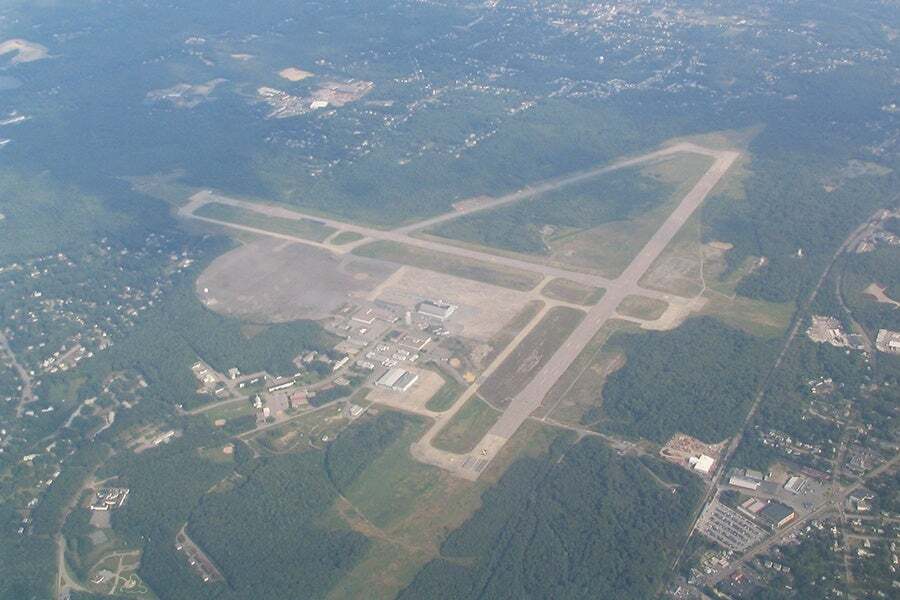
Nearly three decades after the last military aircraft left the former South Weymouth Naval Air Station, one of Massachusetts’ largest and most complicated redevelopment sites may finally be approaching its next chapter.
In July 2026, a joint venture involving Brookfield and New England Development acquired approximately 220 acres at Union Point for $65 million. The land had previously been controlled by Washington Capital Management after the lender took it back from former master developer LStar Ventures in 2019.
On its own, the transaction is significant. But the story behind those 220 acres stretches far beyond a single commercial real estate sale.
The land is part of the roughly 1,400-acre former naval air station spanning Weymouth, Rockland and Abington—a property that Massachusetts communities and developers have spent nearly 30 years trying to transform. Plans have changed. Developers have come and gone. Ambitious commercial districts have been proposed but never built. More than 1,000 homes have risen on portions of the former base, while the infrastructure needed to unlock its full development potential has remained a persistent challenge.
Now, the latest vision calls for approximately 6,500 homes and 2 million square feet of commercial and retail development.
It is a dramatically different future from earlier plans that contemplated as much as 10 million square feet of commercial space.
The evolution of Union Point is more than the story of one stalled megaproject. In many ways, it reflects how Greater Boston’s real estate priorities have changed over the past three decades.
Union Point Timeline
From Naval Air Station to 1,400-Acre Redevelopment
More than eight decades of history and nearly 30 years of redevelopment efforts have shaped the property now known as Union Point.
Before Union Point, There Were Blimps
Long before developers envisioned apartments, shops and offices at Union Point, the property played a very different role.
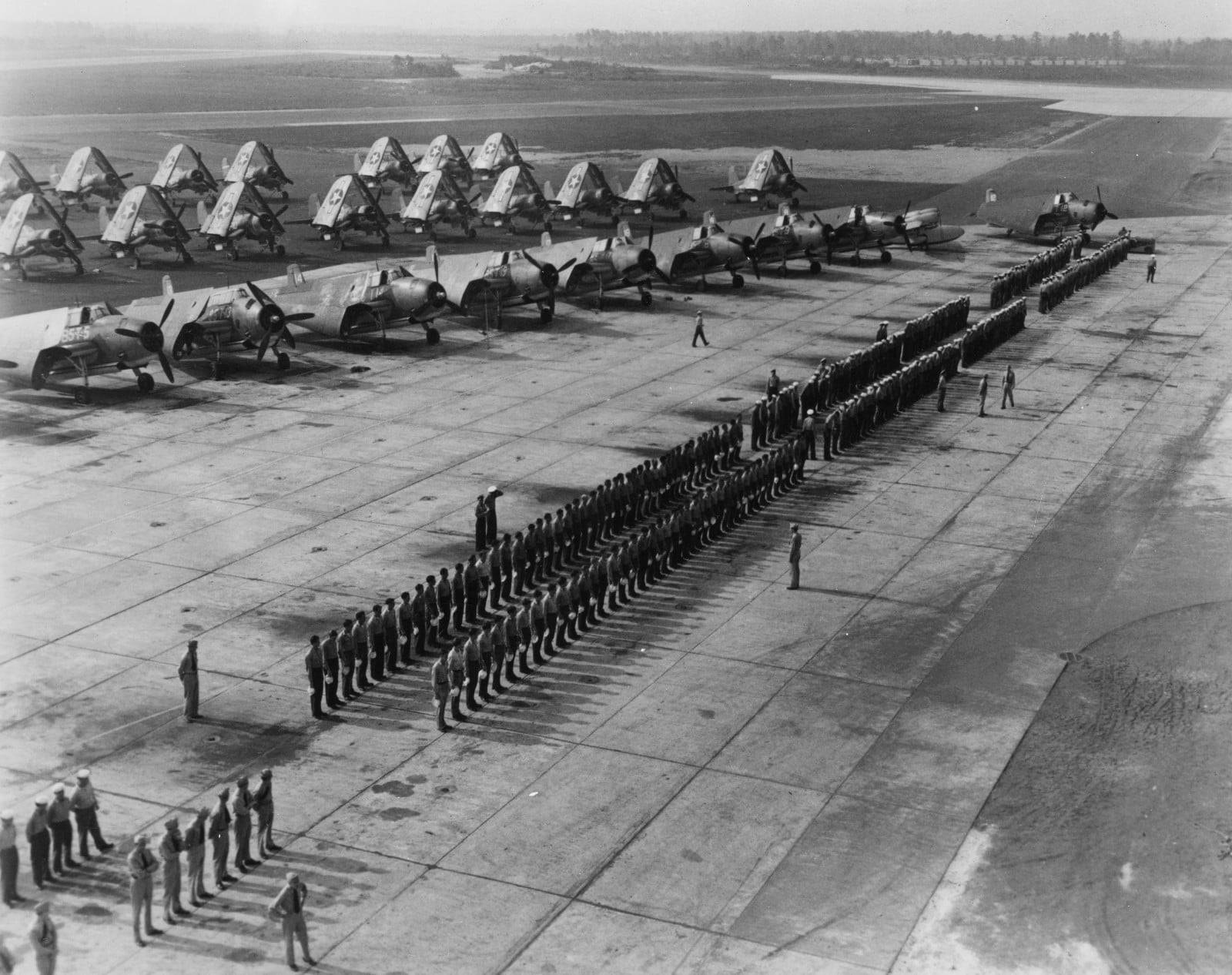
Construction of the South Weymouth Naval Air Station began during World War II, and the base was commissioned in 1942. Among its earliest missions was supporting Navy blimps used for coastal patrols and anti-submarine operations.
The scale of the military infrastructure matched the unusual aircraft it was designed to accommodate. One of the base’s original blimp hangars reportedly covered approximately eight acres beneath a single roof and ranked among the world’s largest aviation hangars at the time.
The base later evolved into a Naval Air Reserve facility and remained active for decades before closing in 1997.
Its closure left the South Shore with something extraordinarily rare in Greater Boston: approximately 1,400 acres of land assembled across three municipalities, much of it within commuting distance of Boston and adjacent to an existing commuter rail station.
It also left local officials with an enormous question.
What do you do with a former military base the size of a small town?
A Plan to Build a New Community
The answer, at least in theory, was to create one.
A redevelopment authority was established in 1998, beginning what would become a decades-long effort to convert the former military installation into a mixed-use community.
LNR Property was selected as master developer in 2002. In 2011, the Navy transferred 681 acres to the redevelopment authority, including approximately 558 acres considered developable that were subsequently transferred to LNR.
The vision was ambitious.
Rather than simply subdividing the former base for conventional suburban development, planners envisioned a large-scale community combining housing, employment, retail, recreation and extensive open space.
Infrastructure work began. Residential neighborhoods followed.
But transforming a former military installation into something resembling a new town proved far more complicated than drawing a master plan.
From SouthField to Union Point
The project changed hands as well as identities while development progressed.
Starwood Capital Group acquired LNR in 2013, and in 2015, LStar Southfield LLC assumed master-development responsibilities.
A year later, the development received the name by which it is known today: Union Point.
LStar’s plans were expansive. State records from the period described a master-plan goal of approximately 3,855 residential units and between 900,000 and 8 million square feet of commercial development.
Other versions of the broader long-term vision went even further. An older Union Point master plan described by the Town of Weymouth contemplated approximately 4,000 homes and as much as 10 million square feet of commercial space, surrounded by extensive open space and a network of trails.
The idea was effectively to build a new economic center on the South Shore.
The reality moved much more slowly.
By June 2017, state records showed 616 residential units had been built, along with approximately 40,000 square feet of commercial space.
For a project envisioning millions of square feet of commercial development, the gap between the master plan and what existed on the ground was enormous.
And LStar’s attempt to close that gap would eventually unravel.
When the Lender Became the Landowner
By 2019, LStar’s redevelopment effort had faltered.
Washington Capital Management, which had financed portions of the project, ultimately took control of approximately 220 acres previously held by LStar.
The episode illustrates one of the fundamental challenges of large-scale real estate development: controlling hundreds of acres is only the beginning.
Projects of Union Point’s scale depend on enormous investments in roads, utilities, water and sewer capacity. They require coordination between developers, multiple municipalities, state agencies and infrastructure providers. And because they unfold over decades rather than years, they must survive changes in interest rates, capital markets and demand for different property types.
When LStar’s plans stalled, Union Point once again needed a new path forward.
Brookfield was selected as a new master developer in 2020.
But a substantial portion of the land remained in Washington Capital’s hands.
That makes the July 2026 transaction particularly significant.
The $65 million acquisition by the Brookfield and New England Development venture brings approximately 220 acres previously controlled by the lender into the ownership of the current development team—potentially removing one more obstacle from a project that has accumulated plenty of them.
Union Point Today
What’s Actually Been Built?
Figures reflect the latest detailed state development counts cited in this article, reported through 2022–2023, and should not be interpreted as a live 2026 construction total.
Union Point Isn’t Empty
Despite its long history of stalled plans, Union Point should not be mistaken for an abandoned development.
People already live there.
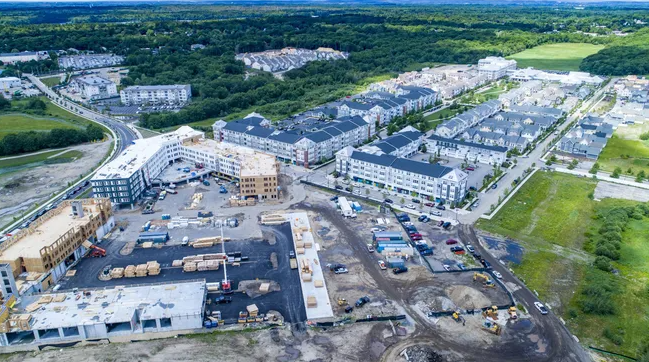
According to a Massachusetts state audit, development at the former base had produced 1,254 residential units and approximately 43,000 square feet of commercial space by fiscal 2022.
By April 2023, the residential total had reportedly reached 1,274 completed homes, including multifamily apartments, townhouses, condominiums and single-family homes.
The site also includes a 25-acre indoor and outdoor sports complex.
In other words, Union Point has succeeded in becoming a residential community—just not yet the enormous mixed-use destination envisioned by generations of master plans.
The disparity is especially striking on the commercial side.
Earlier plans contemplated millions of square feet of commercial development, with some visions reaching as high as 10 million square feet.
State reporting for fiscal 2022 showed approximately 43,000 square feet had actually been developed.
The challenge facing Union Point has therefore shifted. The question is no longer whether anything can be built on the former base.
It is whether development can finally reach the scale envisioned for it.
A Train Station Wasn’t Enough
Union Point possesses one amenity that many suburban megaprojects would envy: nearby commuter rail service.
The MBTA’s South Weymouth station on the Kingston Line sits adjacent to the redevelopment area, providing a direct transit connection toward Boston.
On paper, it is an ideal ingredient for transit-oriented development.
Thousands of new homes. Commercial space. Recreation. Open space. And regional rail access connecting the community to Boston.
But one of Union Point’s most consequential infrastructure challenges has involved something far more fundamental.
Water.
Securing sufficient long-term water capacity has been a persistent issue in efforts to expand development at the former base.
The current redevelopment strategy is connected to plans for a roughly 6.7-mile pipeline linking Weymouth with the Massachusetts Water Resources Authority system. The project is expected to require years of additional planning and construction, with completion currently targeted for 2031.
More than $35 million in state and local funding has been secured for water, wastewater and transportation improvements associated with the broader redevelopment.
The Infrastructure Challenge
Unlocking Development at Union Point
For a project with ambitions approaching the scale of a small city, those investments are critical.
Union Point has land.
It has housing.
It has commuter rail access.
What it has repeatedly struggled to secure is enough infrastructure to support the enormous scale envisioned for its future.
From 10 Million Square Feet of Commercial Space to 6,500 Homes
Perhaps the clearest indication of how Union Point has changed can be found in the numbers.
An earlier long-term vision for the property contemplated approximately 4,000 residential units and as much as 10 million square feet of commercial space.
The latest proposal looks very different.
The current redevelopment vision calls for approximately 6,500 housing units and 2 million square feet of commercial and retail development, along with more than 880 acres of open and restricted space.
The Changing Master Plan
Then vs. Now
Compared with the earlier 4,000-unit and 10-million-square-foot vision, that represents substantially more housing and dramatically less commercial development.
The shift reflects a very different Greater Boston real estate market.
The idea of developing millions of square feet of new suburban office or commercial space faces a different economic reality today than it did when earlier versions of Union Point were conceived. Hybrid work has reshaped office demand. Greater Boston’s life science expansion has slowed. Vacancy has increased across many commercial property types.
Housing, meanwhile, has become one of Massachusetts’ most urgent development challenges.
Seen through that lens, Union Point’s transformation makes sense.
The former base was once envisioned as something closer to a new suburban employment center surrounded by housing.
Its latest iteration appears increasingly focused on becoming a major residential community supported by a smaller—but still substantial—commercial component.
Thirty Years of Changing Plans
Union Point’s history can almost be read as a timeline of Greater Boston real estate itself.
The Navy left in 1997.
A redevelopment authority followed in 1998.
LNR became master developer in 2002.
Major infrastructure work began in 2011.
Starwood acquired LNR in 2013.
LStar took over the project in 2015.
SouthField became Union Point in 2016.
By 2019, LStar’s redevelopment effort had faltered and Washington Capital had taken control of approximately 220 acres.
Brookfield was selected as the new master developer in 2020.
Now, in 2026, Brookfield and New England Development have acquired those 220 acres from Washington Capital for $65 million.
Nearly three decades after the base closed, the story is still being written.
Could This Time Be Different?
There are reasons to be cautious.
Union Point has already survived multiple developers and multiple versions of its master plan. Announcements of ambitious new phases are nothing new for the former naval air station.
The infrastructure work ahead remains substantial, and a project involving thousands of additional homes will take years—if not decades—to fully develop.
But the current effort also arrives under circumstances that differ from previous attempts.
More than 1,000 homes already exist on the site. A major institutional development team is in place. A significant land transaction has transferred approximately 220 acres from a lender to the current development venture. Public funding has been committed toward critical infrastructure. And the latest master plan appears more closely aligned with one of Massachusetts’ greatest current needs: housing.
If the newest vision moves forward, Union Point could eventually become one of the largest mixed-use communities developed in Massachusetts in generations.
If it stalls again, it will become another chapter in an already remarkable story of just how difficult it can be to transform 1,400 acres of former military land into a functioning piece of the modern Greater Boston economy.
Either way, the $65 million sale marks another turning point for a property that has spent nearly 30 years being reinvented. From Navy blimps to suburban office campuses to thousands of new homes, Union Point has been asked to become many things.
Its latest developers are now betting that, after three decades of trying, the former South Weymouth Naval Air Station may finally be ready to become a community at the scale its planners have imagined for years.
Explore Greater Boston Commercial Real Estate
Stay informed on the latest developments, transactions and trends shaping commercial real estate across Greater Boston.
Explore ABG Realty