


A Needham-based investment firm is making another attempt to acquire one of the country’s largest portfolios of department-store real estate.
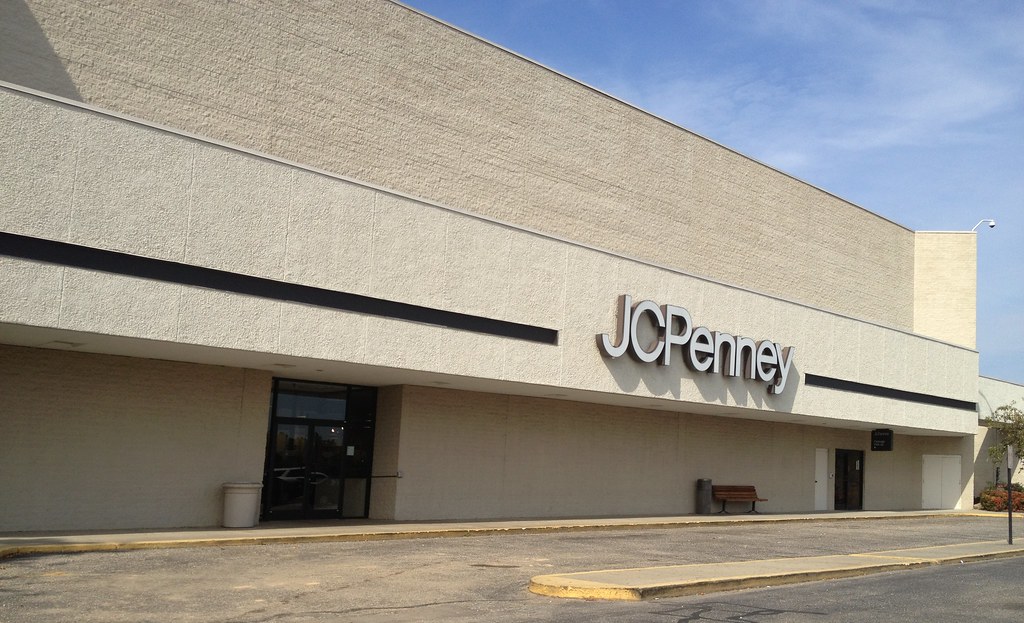
Onyx Partners says it has submitted a $934 million proposal to purchase 117 JCPenney-occupied properties from Copper Property CTL Pass Through Trust. The portfolio spans approximately 15.7 million square feet across 35 states and includes the JCPenney property at Northshore Mall in Peabody.
At an average of approximately $8 million per property, the offer may appear to be a bet on the future of an aging department-store chain.
But Onyx would not be buying JCPenney or taking over its retail operations. It would be purchasing the physical properties and becoming the landlord to stores already operating under long-term leases.
That distinction makes the proposed acquisition both less dramatic and more interesting. Onyx may be pursuing a nationwide stream of rental income, the long-term value of the underlying real estate or some combination of the two.
The Proposed Acquisition
The JCPenney Portfolio by the Numbers
The Portfolio Is a Product of JCPenney’s Bankruptcy
The unusual ownership structure dates to JCPenney’s 2020 Chapter 11 bankruptcy.
As part of the company’s reorganization, Copper Property CTL Pass Through Trust was established to acquire 160 retail properties and six warehouse distribution centers previously associated with JCPenney.
Copper was not created to operate the department stores permanently. Its purpose is to own, lease and ultimately sell the properties, distributing the proceeds to certificate holders connected to the bankruptcy proceedings.
More than 40 properties have since been sold to other buyers. The 117 properties Onyx is now attempting to acquire represent the remaining retail portfolio, according to reporting citing Copper documents.
The stores are subject to long-term leases with JCPenney affiliates. Copper previously described the arrangement as a triple-net master lease, a structure under which the tenant is generally responsible for rent as well as major property expenses such as taxes, insurance and maintenance.
For a potential buyer, that structure can provide predictable income while reducing some of the day-to-day costs normally associated with owning commercial property.
Onyx Has Already Tried to Complete the Acquisition
This is not the first agreement between Onyx and Copper.
In July 2025, Copper announced a binding agreement to sell 119 properties to an Onyx affiliate for $947 million in cash. Onyx had completed its due diligence, and the transaction was initially scheduled to close by September 8.
The closing was delayed several times and ultimately did not occur.
Copper announced in December that Onyx had not completed the acquisition by the final deadline. Onyx disputed Copper’s account and filed a breach-of-contract lawsuit. The parties also became involved in a dispute over a $5 million deposit.
The failed transaction created additional uncertainty for Copper. In its annual reporting, the trust said litigation could interfere with the portfolio sale and raised the possibility of placing the properties into a real estate investment trust or another investment vehicle.
Onyx has now returned with a new proposal for 117 properties at a slightly lower total price.
The firm says financing is fully arranged and that it is prepared to close the acquisition in September. However, published reports give different potential closing dates, and Copper had not publicly accepted the proposal as of August 3.
Until Copper responds or a new agreement is announced, the $934 million offer remains a proposal rather than a completed transaction.
The Stores Are Not Closing as Part of the Sale
Although the portfolio’s history is tied to JCPenney’s bankruptcy, the 117 properties are not vacant department stores awaiting redevelopment.
Catalyst Brands, the holding company that operates JCPenney, says all 117 stores have long-term leases. A sale would transfer ownership of the real estate without changing store operations or the terms of those leases.
Customers would continue shopping at JCPenney, employees would continue working for the retailer and Onyx would collect rent as the new property owner.
That makes this fundamentally different from purchasing a portfolio of empty Sears stores or abandoned mall anchors.
Onyx would initially be buying occupied, income-producing properties rather than 117 immediate redevelopment projects.
The proposed sale would change who owns the physical properties—not who operates the stores. JCPenney would remain the tenant under its existing long-term leases.
A Nearly $1 Billion Bet on One Tenant
The portfolio’s greatest strength may also be its most significant risk.
Long-term leases can provide reliable cash flow, but the properties are heavily dependent on one retail company.
JCPenney continues to operate hundreds of stores, but its financial performance remains under pressure. The retailer’s net sales declined nearly 5% year over year during the first quarter of 2026, falling to approximately $1.25 billion. Gross margin also contracted, although net losses improved.
Catalyst Brands may provide JCPenney with additional time and resources to continue its turnaround. Nevertheless, department stores remain exposed to changing shopping patterns, e-commerce competition and the uneven performance of traditional malls.
For Onyx, the investment would therefore depend partly on JCPenney’s ability to meet its long-term lease obligations.
The large portfolio also creates concentration risk. Although the properties are spread across 35 states, the rental income is tied principally to one tenant and one retail format.
Not Every JCPenney Property Has the Same Value
Dividing the $934 million proposal by 117 produces an average of approximately $8 million per property. That does not mean each location is worth the same amount.
The properties vary in building size, market strength, surrounding development, lease terms and underlying land value.
A JCPenney attached to a busy, well-maintained regional mall may continue to support retail use for years. A similar building at a struggling mall in a smaller market may face a very different future.
The portfolio’s Massachusetts property illustrates the importance of location. Northshore Mall is situated near the intersection of Routes 114 and 128 in Peabody, providing regional highway access within the Greater Boston market.
Its prospects cannot be evaluated in the same way as a JCPenney located in a declining mall with limited surrounding demand.
Onyx would effectively be purchasing 117 different pieces of real estate packaged within a single transaction.
Could the Properties Eventually Be Redeveloped?
The portfolio may also offer long-term redevelopment potential, but no plans have been announced to convert the properties.
The existing leases would remain in place following a sale. Even if an individual JCPenney stopped operating, the lease might continue unless it was terminated or renegotiated.
Department-store properties may also be governed by reciprocal easement agreements, ground leases, parking requirements and purchase rights involving the surrounding mall. Local zoning and permitting would create additional constraints.
If individual properties eventually became available, potential reuse options could include medical facilities, entertainment venues, offices, education space, housing or mixed-use development.
Large department stores often provide extensive parking, prominent road access and open floorplates. Those characteristics can make some buildings suitable for healthcare, recreation or other large-format uses.
Housing conversion is usually more difficult. Department stores commonly have deep floorplates, limited windows and mechanical systems designed for retail rather than residential occupancy. In many cases, demolishing the building or constructing housing on its surrounding parking areas may be more practical than converting the existing structure into apartments.
The strongest redevelopment opportunities would depend on the quality of the underlying land, local housing and commercial demand, and whether legal agreements allow the property to operate independently from the rest of the mall.
Income Today, Optionality Tomorrow
The proposed acquisition can be viewed as a two-part real estate strategy.
In the near term, Onyx would receive rental income from 117 operating JCPenney stores under long-term leases.
Over the longer term, the firm could own a geographically diverse collection of large retail properties whose land may support alternative uses—if leases expire, legal restrictions are resolved and local market conditions justify redevelopment.
That potential does not guarantee that every property will eventually become housing, healthcare space or another new use. Some locations may remain viable department stores. Others may be released to different retailers, subdivided or incorporated into broader mall redevelopments.
The portfolio’s value lies partly in that range of possibilities.
What Happens Next?
Onyx says it is prepared to move forward, but Copper has not publicly accepted the latest proposal.
The parties must also contend with the unresolved history of their first transaction and the litigation that followed it. Until a new binding agreement is announced, ownership of the portfolio remains unchanged.
Still, the renewed offer demonstrates that large department-store properties retain value even amid questions about the future of traditional retail.
Onyx is not simply betting that Americans will continue shopping at JCPenney forever. Nor is it buying 117 empty buildings to redevelop immediately.
It is pursuing a portfolio that provides rental income today while potentially offering control over millions of square feet of strategically located real estate tomorrow.
The central question is not only whether JCPenney can survive.
It is whether the land and buildings associated with the retailer are worth nearly $1 billion regardless of what eventually occupies them.
Sources: Boston Business Journal, CoStar, Retail Dive, Copper Property CTL Pass Through Trust and Bisnow.
Explore Greater Boston Commercial Real Estate
Stay informed on the transactions, developments and trends shaping commercial real estate across Greater Boston and New England.
Explore ABG Commercial