


Greater Boston & New England Commercial Real Estate
Can Artists Bring the Star Store Back to Life? Inside New Bedford’s Downtown Experiment
After losing its university anchor tenant, New Bedford’s 125,000-square-foot Star Store is being reimagined as a creative hub built around artists, makers and dozens of smaller tenants.
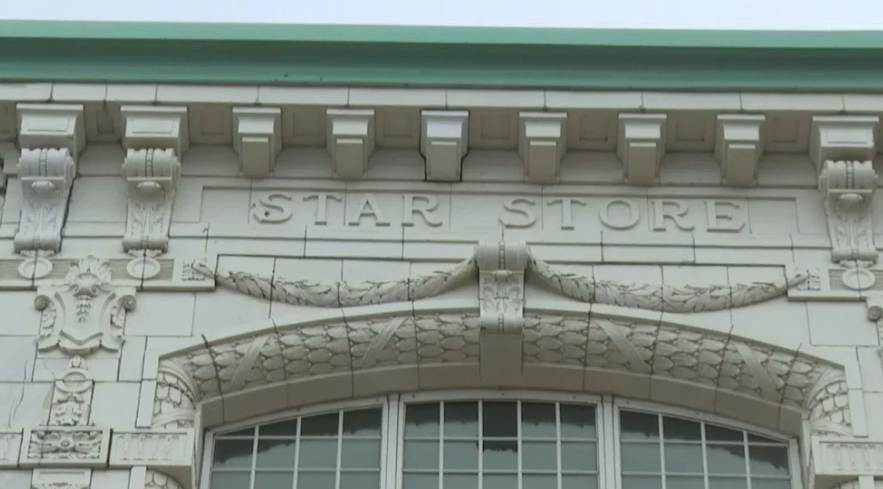
For more than a century, the Star Store has adapted alongside downtown New Bedford.
It began as a downtown retail destination, later became a university arts campus and, after the departure of UMass Dartmouth in 2023, once again faced an uncertain future.
Now, the approximately 125,000-square-foot historic building at 715 Purchase Street is preparing for another transformation.
The Arts & Business Council of Greater Boston acquired the property for a nominal $1 in 2025 through its Creative Land Trust initiative. Rather than replacing the university with another single institutional tenant, the nonprofit is pursuing a different model: filling the former campus with a community of artists, makers, creative organizations and small businesses.
With 110 prospective tenants reportedly applying for space, the project could become an unusual experiment in both adaptive reuse and downtown revitalization.
The question is whether a building once sustained by one major institutional occupant can find a viable future by opening its doors to an entire creative community.
715 Purchase Street
The Star Store by the Numbers
From Department Store to Downtown Landmark
The Star Store’s history stretches back to the 19th century, when the New Bedford Dry Goods Company operated at the site. The property was rebuilt and modernized in 1915 as a four-story department store that became a fixture of downtown New Bedford.
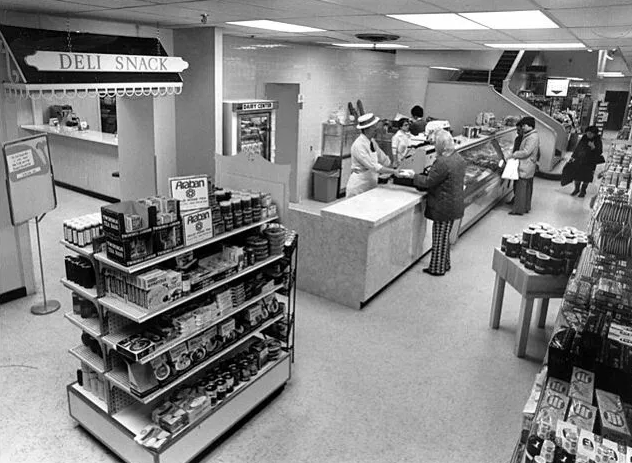
At its height, the Star Store employed hundreds of people and served as a major retail destination.
But like department stores in downtowns across the country, it eventually struggled as shopping patterns shifted toward suburban malls and other retail formats. The Star Store closed in 1985, leaving behind a large and increasingly difficult-to-repurpose property in the center of the city.
The City of New Bedford eventually took possession of the property for unpaid taxes in the 1990s, setting the stage for its first major reinvention.
A public-private redevelopment effort transformed the former department store into a downtown campus for UMass Dartmouth’s College of Visual and Performing Arts.
By 2001, students and faculty had moved into the building.
For New Bedford, the project brought a major institutional presence—and hundreds of students—into the heart of downtown.
For the Star Store, it provided a new purpose for a building whose original reason for existing had largely disappeared.
A Complicated $1 Purchase Option
The arrangement that brought UMass Dartmouth downtown was unusual.
Under a long-term lease-to-own structure involving the Commonwealth and the building’s private ownership, the state made annual lease payments while UMass Dartmouth operated its arts programs at the property.
The agreement also included an option for the Commonwealth to acquire the Star Store for a nominal $1 near the conclusion of the original lease term.
But the transfer never happened.
When the original lease expired in 2021, the state continued under an extension rather than immediately completing an acquisition. Massachusetts lawmakers later directed the UMass Building Authority to exercise the purchase option in 2022, but the building’s owner disputed whether the option remained valid at that point.
The acquisition was never completed.
The episode became the subject of significant political debate, particularly after UMass Dartmouth announced in 2023 that it would leave the Star Store.
But the nominal purchase price told only part of the property’s financial story.
When a $1 Building Could Require Millions
Taking ownership of a building for $1 does not make the building itself inexpensive to operate.
UMass Dartmouth officials pointed to substantial costs associated with maintaining the Star Store as a university facility.
Former Chancellor Mark Fuller said the building required approximately $1 million annually for expenses including utilities, security, cleaning and routine maintenance. He also cited a state estimate suggesting that deferred maintenance and work related to accessibility and energy requirements could reach up to $75 million.
The university’s overall annual occupancy costs were reported at approximately $3.1 million, much of which had been supported by a state appropriation. When that funding was no longer included in the state budget, UMass Dartmouth said continued occupancy was no longer financially feasible.
The university left the building in 2023 after more than two decades downtown.
The departure created an immediate challenge for New Bedford: a highly visible, approximately 125,000-square-foot building in the center of the city had lost its anchor tenant.
And for the second time in its history, the Star Store needed a new reason to exist.
Another $1 Sale—and a Different Real Estate Model
In May 2025, the Star Store entered its next chapter when the property was transferred to the Arts & Business Council of Greater Boston for $1.
The nonprofit’s Creative Land Trust focuses on preserving long-term affordable real estate for artists and creative organizations.
Its approach to the Star Store differs significantly from the property’s previous operating model.
Under UMass Dartmouth, the building depended primarily on one major institutional occupant.
The new plan distributes that role among many smaller users.
Individual artists could rent workspace. Creative nonprofits and businesses could establish offices. Shared production facilities could provide equipment and resources that would be difficult for individual tenants to maintain independently. Galleries and event spaces could bring the public into the building.
Rather than replacing one anchor tenant with another, the strategy is to turn the building itself into shared creative infrastructure.
A New Approach to Occupancy
One Building, A New Model
University Arts Campus
One major institutional occupant
- UMass Dartmouth as anchor occupant
- University-operated arts facilities
- State-supported occupancy costs
- Centralized institutional operations
Shared Creative Hub
A community of smaller users
- Individual artists and makers
- Creative organizations and businesses
- Shared production facilities
- Galleries and public programming
110 Prospective Tenants
There are early indications of demand for that model.
As of July 2026, the Arts & Business Council had reportedly received 110 applications from prospective tenants interested in space at the Star Store.
The organization also conducted an extensive community engagement process involving hundreds of local stakeholders.
The resulting vision extends well beyond individual artist studios.
Preliminary plans call for shared production facilities in the basement, potentially supporting uses such as ceramics, printmaking, photography and video production.
The ground floor could include galleries, offices and event spaces designed to create a stronger connection between the building and the surrounding downtown.
Upper floors are expected to accommodate a combination of individual workspaces and larger creative organizations, while longer-term possibilities include a rooftop event space and improvements to the building’s street-level presence.
If successful, the Star Store could once again become an active downtown destination—but with dozens of smaller occupants replacing the university that previously anchored the property.
Inside the Vision
What Could Fill 125,000 Square Feet?
A Building Designed to Be Shared
Preliminary plans envision different parts of the Star Store supporting different types of creative activity.
Shared production facilities could provide specialized resources for artists, while studios and organizational space on upper floors could support a broader community of tenants.
Public-facing uses on the ground floor could help reconnect the building with the surrounding downtown.
This diagram is a conceptual representation based on publicly reported preliminary plans and is not intended as an architectural floor plan.
Two Very Different Renovation Numbers
One of the most striking elements of the Star Store story is the difference between the renovation figures discussed before UMass Dartmouth’s departure and the cost of the nonprofit’s initial reactivation effort.
The university cited a state estimate of up to $75 million in potential deferred maintenance and other building needs.
The Arts & Business Council, meanwhile, is pursuing an initial approximately $2.3 million “make it work” phase, with roughly $1.1 million reportedly raised toward that effort as of July 2026.
Those figures are dramatically different, but they should not be treated as competing estimates for the same project.
UMass Dartmouth was considering the long-term needs of a large university facility, including institutional operating requirements and potentially significant accessibility, energy and deferred-maintenance work.
The Creative Land Trust’s initial phase has a narrower objective: completing enough immediate work to begin safely reactivating the property while larger improvements are pursued over time.
Initial work is expected to address critical building needs including the roof, boilers, electrical systems, ventilation and elevators.
The difference illustrates one of the potential advantages—and risks—of phased adaptive reuse.
Instead of completing every possible capital improvement before reopening the building, a new owner can attempt to stabilize the property, activate usable portions and undertake larger improvements incrementally.
Whether that strategy proves sustainable at the Star Store will depend on the condition of the building, future fundraising and the ability to generate enough activity and revenue to support a property of its size.
More Than Artist Studios
The Star Store’s location makes the project particularly significant.
Many artist-space developments occupy former mills, warehouses and industrial properties outside traditional commercial centers.
The Star Store is different.
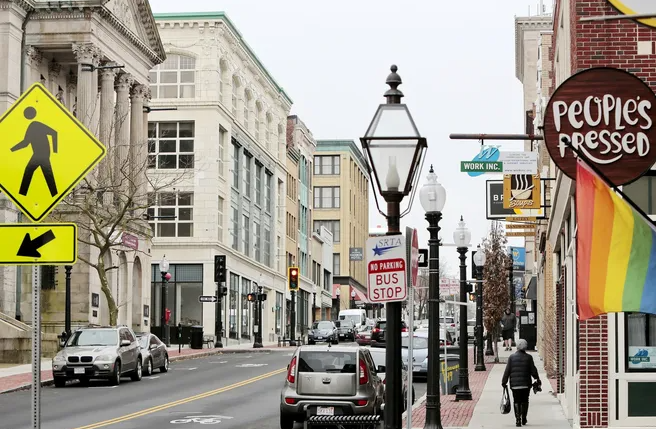
It occupies a prominent position in downtown New Bedford, meaning its success or failure has implications for the streets and businesses surrounding it.
A fully activated building could bring artists to work downtown during the day, visitors to galleries and programs, and audiences to events in the evening.
That activity could translate into additional foot traffic for nearby restaurants, retailers and other businesses.
The project is therefore not only an experiment in preserving affordable creative space.
It is also an experiment in whether the creative economy can function as a form of downtown economic development.
Can Many Small Tenants Replace One Big One?
For more than 20 years, the Star Store’s future was closely tied to a single institution.
Now, its new owner is betting on almost the opposite strategy.
Instead of one university occupying 125,000 square feet, the building could become home to a network of artists, organizations, makers and creative businesses sharing the same infrastructure.
That model comes with challenges.
Managing many smaller tenants is different from leasing to one institution. Affordable rents must still generate enough income to support operations. A historic building of this scale will continue to require maintenance and capital investment regardless of who occupies it.
But the reported interest from 110 prospective tenants suggests there is demand for the type of space the Creative Land Trust hopes to create.
The next test is whether that demand can be translated into a sustainable real estate model.
The Star Store’s next chapter represents a fundamentally different approach to occupying a large downtown property: instead of relying on a single anchor institution, its future may depend on building an ecosystem of smaller creative users.
The Star Store’s Next Reinvention
The Star Store has already survived one economic transformation.
When downtown department-store retail declined, the building eventually found a second life as an arts campus.
When UMass Dartmouth departed, that second life came to an end.
Now the building is being asked to adapt once again.
The newest plan does not attempt to recreate the department store that once occupied the property or replace the university with another large institutional tenant. Instead, it proposes something more decentralized: a 125,000-square-foot creative hub supported by a community of users.
The initial goal is to begin welcoming artists back to the building by the end of 2026 or early 2027, with larger improvements envisioned over the longer term.
Whether the model ultimately succeeds remains to be seen.
But after years of uncertainty surrounding one of downtown New Bedford’s largest landmarks, the Star Store is once again moving toward occupancy.
Its next chapter may depend not on finding another institution large enough to fill the building, but on determining whether an entire creative community can fill it together.
Explore New England Commercial Real Estate
Stay informed on the developments, transactions and trends shaping commercial real estate across Greater Boston and New England.
Explore ABG Commercial