


Greater Boston Commercial Real Estate
When a College Closes, Who Gets the Campus? The Uncertain Future of 27 Acres in Quincy
A private redevelopment proposal fell through. Quincy then considered a $21 million municipal acquisition. After the City Council rejected the deal, the former Eastern Nazarene College campus is facing an uncertain future once again.
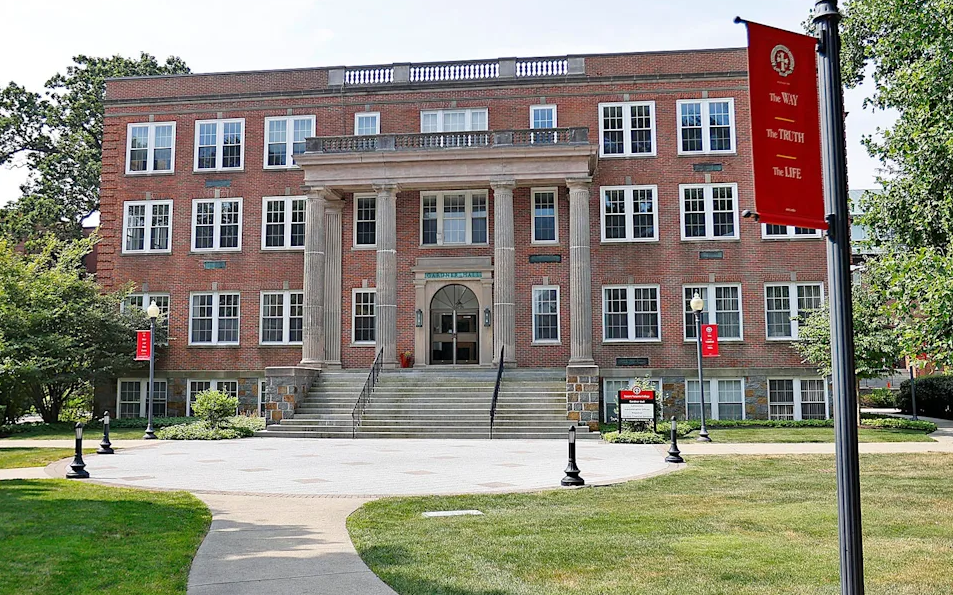
When Eastern Nazarene College closed its doors after more than a century in Quincy, it left behind more than empty classrooms.
It left approximately 27 acres of real estate.
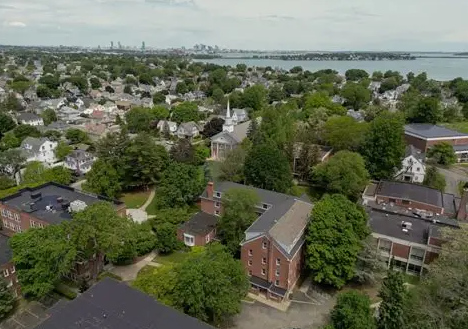
The former campus encompasses 31 parcels and a collection of academic, residential, athletic and institutional properties in Quincy’s Wollaston neighborhood. After the college ceased operations in 2025, the site quickly became the subject of an unusual real estate question: What happens to an entire college campus when there is no longer a college to occupy it?
Over the past year and a half, at least two answers have emerged.
A private developer proposed a housing-focused redevelopment. When that transaction failed to close, the City of Quincy pursued a $21 million acquisition of the property itself.
In June 2026, the Quincy City Council rejected the city’s proposed purchase and accompanying $22.5 million borrowing request.
Now, the future of one of Quincy’s most significant redevelopment opportunities is uncertain once again.
Eastern Nazarene College
The Campus by the Numbers
The End of a College, the Beginning of a Real Estate Question
Eastern Nazarene College had been a fixture in Quincy for generations before financial and enrollment pressures led the institution to announce its closure.
When the college ceased operations, the transition created a challenge increasingly familiar to communities across New England: finding a new purpose for a large institutional property originally designed around a highly specialized use.
A college campus is not a conventional redevelopment site.
Dormitories are not quite apartment buildings. Academic halls are not necessarily suited for modern office tenants. Athletic facilities, theaters, libraries and other institutional buildings may have significant value to a community but limited appeal to traditional commercial buyers.
At Eastern Nazarene, those challenges are compounded by the property’s scale.
The proposed municipal acquisition encompassed approximately 27.1 acres across 31 parcels, including the main campus and a collection of college-owned residential properties in the surrounding neighborhood.
Redeveloping the property therefore involves more than determining what to do with a few vacant buildings. It requires deciding what role a former college campus should play in the future of the neighborhood around it.
A Complex Real Estate Portfolio
One Campus, Many Pieces
This graphic illustrates the general types of property and facilities associated with the former campus and is not intended as an official parcel map or complete building inventory.
The First Plan: A Housing-Focused Redevelopment
Before the City of Quincy attempted to acquire the campus, a private developer appeared positioned to take on that challenge.
In early 2025, Eastern Nazarene reached an agreement in principle to sell the property to The Crain Company, led by Graham Crain, a 2006 graduate of the college.
The proposed redevelopment would have retained and repurposed portions of the existing campus while introducing a mix of multifamily housing, townhouses and senior living.
Financial terms of the proposed transaction were not publicly disclosed.
The plan represented one possible path for former institutional properties: adapting buildings and land originally dedicated to education to meet demand for housing.
But the transaction was never completed.
In November 2025, Eastern Nazarene’s transition board announced that the proposed sale would not be finalized. A specific reason for the deal’s collapse was not publicly established.
With the private redevelopment proposal no longer moving forward, the campus remained without a long-term owner or reuse plan.
Then the City of Quincy stepped in.
Competing Paths Forward
Two Plans, Neither Completed
The Crain Company
Proposed 2025
- Multifamily housing
- Townhouses
- Senior living
- Reuse of portions of the existing campus
City of Quincy
Proposed 2026
- Potential civic and community uses
- Housing possibilities
- Potential sale of individual properties
- Municipal control over future redevelopment
Quincy’s $21 Million Proposal
In April 2026, Mayor Thomas Koch announced an agreement for Quincy to acquire the former Eastern Nazarene property for $21 million.
The proposal would have placed an unusually large and complex real estate portfolio under direct municipal control.
The potential acquisition also appeared, at least on paper, to offer a significant discount. Publicly reported figures placed the property’s assessed value at approximately $55 million to $58 million, substantially above the negotiated purchase price.
But the city’s financial commitment would not have ended at $21 million.
The Koch administration requested authorization to borrow $22.5 million to fund the acquisition and related costs.
And purchasing the property would have been only the beginning.
A 27-acre former college campus carries ongoing expenses associated with security, utilities, insurance and building maintenance. Aging or specialized institutional buildings may also require significant capital investment before they can accommodate new uses.
That distinction became central to the debate surrounding the proposal.
Supporters could point to the opportunity to acquire a substantial portfolio of Quincy real estate for considerably less than its reported assessed value.
Opponents questioned whether the purchase price adequately reflected the costs and financial risks the city could assume after becoming the owner.
The same numbers could support two very different interpretations of the deal.
The purchase price was only part of the debate. Municipal ownership would also have placed responsibility for maintaining and eventually repurposing a 27-acre former college campus with the City of Quincy.
What Would Quincy Have Done With a College Campus?
The city’s proposal did not envision simply turning the entire former campus into municipal offices.
Instead, the acquisition could have allowed Quincy to approach the property piece by piece.
Ideas discussed during the process included a potential improved Wollaston library, educational and child services, community access to theater and athletic facilities, stormwater improvements, senior housing and opportunities for first-time homebuyers.
The city could also have eventually sold some of the residential properties included in the acquisition.
Under that approach, municipal ownership would have functioned partly as a tool for controlling the property’s transition.
Rather than allowing a private buyer to determine the initial redevelopment strategy, Quincy would own the land and could decide which assets to retain for public purposes, which properties to sell and where future development might be appropriate.
Mayor Koch also expressed concern about the potential for high-density residential development if the property were acquired privately.
That concern placed the Eastern Nazarene property at the intersection of two competing pressures facing many Greater Boston communities: the desire for local control over major development sites and the region’s continued need for additional housing.
The Crain Company’s earlier proposal had already demonstrated the site’s potential for residential redevelopment.
Municipal ownership could have given Quincy significantly greater influence over how much housing was ultimately built and where.
When a Bargain Comes With an Unknown Price Tag
The proposed acquisition ultimately became a debate about risk.
Quincy was considering a $21 million purchase of property reportedly assessed at substantially more than twice that amount.
At the same time, city councilors were being asked to authorize $22.5 million in borrowing without a finalized long-term redevelopment plan for all 31 parcels.
Opponents also raised concerns about the city’s broader debt obligations, which were cited during the debate at approximately $1.8 billion.
The disagreement highlighted an important distinction in institutional real estate.
A low acquisition price does not necessarily mean a low-cost property. Campuses require maintenance even when buildings are vacant, while specialized facilities can require substantial investment before they are ready for new uses.
Conversely, control of 27 acres in an established Greater Boston community represents an opportunity that rarely becomes available to a municipality.
For Quincy officials, the question was not simply whether $21 million was a favorable price.
It was whether the potential long-term value of controlling the property justified the immediate borrowing and uncertain future costs.
The City Council Says No
On June 15, 2026, the Quincy City Council rejected the proposed acquisition.
Councilors voted 6–3 against the plan, and the accompanying $22.5 million borrowing authorization also failed.
The vote ended the city’s proposed purchase under the agreement negotiated by the Koch administration.
It did not, however, resolve the future of the campus.
The buildings and land still exist. The college is still closed. And the underlying real estate question remains.
After the earlier private redevelopment proposal failed and the subsequent municipal acquisition was rejected, the former Eastern Nazarene campus is once again without a publicly announced long-term plan.
What Happens Now?
As of July 2026, no new buyer or redevelopment agreement has been publicly announced following the City Council vote.
That leaves several possible paths forward.
Another private developer could pursue the property. A future proposal could once again emphasize housing, particularly given the size and location of the site. Another institutional or nonprofit user could potentially express interest in portions of the campus. The property could also be divided among multiple owners or uses rather than redeveloped under a single master plan.
It is also possible that Quincy could revisit its interest under different financial or redevelopment terms.
For now, however, those possibilities remain just that—possibilities.
What is clear is that the site’s future will have implications beyond the boundaries of the former college.
A redevelopment of 27 acres can introduce hundreds of new residents, preserve community facilities, create new tax revenue or reshape the character of a surrounding neighborhood. Leaving a campus vacant for an extended period presents its own financial and physical challenges.
There is no simple answer.
A Question Facing More Than Quincy
Eastern Nazarene’s story also reflects a broader real estate challenge emerging across New England.
As smaller colleges face declining enrollment, demographic changes and financial pressures, campus closures can suddenly place large institutional properties into communities that may never have planned for their redevelopment.
The resulting opportunities can be substantial.
Former campuses may offer housing potential, historic architecture, open space and existing community facilities. Some are located near established downtowns or public transportation.
But they can also bring aging infrastructure, specialized buildings and significant redevelopment costs.
In Quincy, the first proposed answer for Eastern Nazarene was private, housing-focused redevelopment.
The second was municipal ownership and long-term public control.
Neither moved forward.
The next proposal could look entirely different.
For now, the former Eastern Nazarene College campus remains a 27-acre reminder that when an institution closes, the real estate it leaves behind can begin an entirely new and complicated story.
Explore Greater Boston Commercial Real Estate
Stay informed on the developments, transactions and trends shaping commercial real estate across Greater Boston.
Explore ABG Commercial