

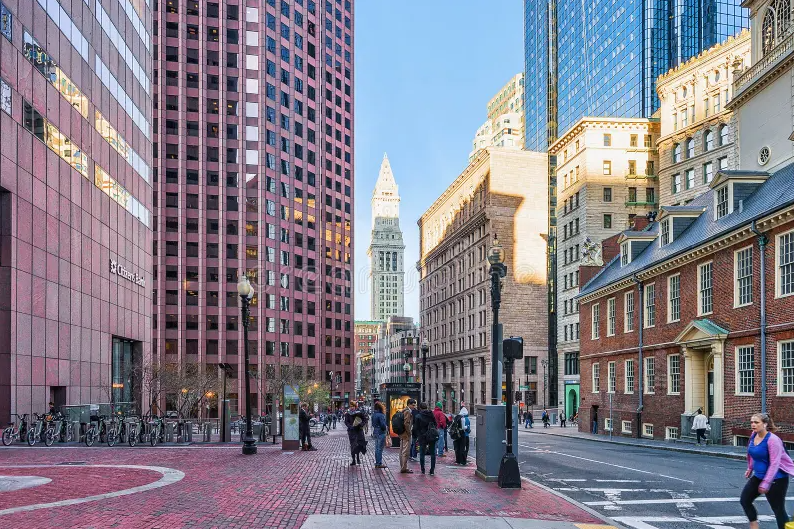

Boston Office Market Split: Why Trophy Buildings Keep Winning While Older Assets Struggle
Boston’s office market is no longer moving as a single asset class. While trophy and Class A buildings continue to attract tenants, capital, and leasing activity, many older properties face growing competitive challenges.
The narrative surrounding Boston’s commercial real estate market has become increasingly difficult to summarize with a single headline. Depending on which properties you examine, the market is either showing signs of stabilization or continuing to face significant headwinds.
Recent market data suggests the reality lies somewhere in between.
While office vacancies remain elevated compared to pre-pandemic levels, several indicators point toward improving conditions. According to CBRE, Downtown Boston vacancy declined from 19.1% in Q2 2025 to 18.7% in Q2 2026, while net absorption reached approximately 804,000 square feet during the second quarter of 2026. Leasing activity also exceeded 1.1 million square feet during the quarter.
At the same time, many older office properties continue to struggle with declining demand, increased concessions, and competitive pressures. The result is a growing separation between the best-performing buildings and the broader office inventory. Boston has effectively become a two-speed office market.
ABG Key Takeaway
The office market’s recovery remains uneven. Demand, capital, and tenant interest are becoming increasingly concentrated in highly amenitized, well-located, best-in-class assets.
One Market, Two Very Different Realities
At first glance, recent office market fundamentals appear encouraging. Leasing activity has improved, vacancy rates have begun stabilizing, and several major transactions have signaled renewed confidence in Boston’s commercial real estate market.
Those metrics paint a picture of a market moving in the right direction.
However, beneath the headline numbers is a growing disparity between property types. Demand is not returning evenly across Boston’s office inventory. Instead, it is increasingly concentrated in a relatively small group of trophy and Class A buildings that offer tenants modern amenities, sustainability initiatives, transit accessibility, and a superior workplace experience.
The defining trend in Boston’s office market is not simply recovery. It is the growing performance gap between trophy assets and the broader office inventory.
Trophy Assets Continue to Outperform
The strongest performers in today’s market are trophy and best-in-class Class A assets.
As companies reevaluate their office footprints, many are choosing to lease less space overall while simultaneously upgrading the quality of that space. Employers increasingly view the office as a tool for recruiting, retention, collaboration, and culture.
Rather than prioritizing the lowest-cost option, tenants are increasingly seeking buildings that help justify the commute and deliver a premium workplace experience.
Across Boston, this trend is benefiting newer developments, highly amenitized towers, and properties located near major transit hubs. Premium assets continue to attract expansions, relocations, and long-term lease commitments even while portions of the broader market remain soft.
Capital Is Following the Same Pattern
The flight to quality is not limited to leasing activity. It is increasingly shaping lending and investment decisions as well.
Market research across the Boston office sector points to a similar trend: demand is becoming increasingly concentrated in top-tier assets while older buildings continue to face leasing and valuation pressure. In many cases, Class A properties are outperforming the broader market in occupancy, rental growth, and investor interest.
For investors and property owners, the message is clear: capital remains available, but it is increasingly flowing toward assets that offer strong locations, modern infrastructure, sustainability features, and a workplace experience aligned with today’s tenant expectations.
What Today’s Lenders Are Prioritizing
- Prime urban and suburban locations
- Modern building systems and infrastructure
- Strong tenancy and leasing momentum
- High-end amenities and workplace experience
- Transit accessibility
- Sustainability and energy efficiency
- Experienced ownership and sponsorship
The Challenges Facing Commodity Office Space
While trophy and Class A assets have gained momentum, many older office buildings continue to face significant challenges.
Landlords are increasingly relying on concession packages, free rent periods, and tenant improvement allowances to attract and retain occupants. In many cases, asking rents have remained relatively stable while effective rents have declined due to the growing cost of incentives.
Many of these properties were designed for a different era of workplace demand. Without meaningful modernization, they often struggle to compete with newer buildings that offer upgraded amenities, sustainability initiatives, flexible workspaces, advanced technology, and improved commuter access.
As tenants become more selective, functional obsolescence has emerged as a growing concern. Buildings that fail to adapt risk longer vacancy periods, weaker leasing activity, and increased pressure on asset values.
What This Means for Owners and Investors
The evolving market landscape highlights a fundamental shift in how tenants, lenders, and investors evaluate office properties. Location remains important, but increasingly, building quality, tenant experience, operational efficiency, and long-term competitiveness are driving decision-making.
Owners of well-positioned assets may continue to benefit from stronger leasing demand, while owners of aging properties may need to consider capital improvements, repositioning strategies, or alternative uses to remain competitive.
Investors evaluating acquisitions should recognize that office performance is becoming more asset-specific than ever before. Market averages often mask significant differences between top-performing buildings and the broader inventory.
ABG Outlook
Boston’s office market is no longer defined by a single trend. While challenges remain, demand, leasing momentum, and investment activity continue to concentrate in premier assets. The result is a market increasingly divided between buildings that meet the evolving expectations of tenants and those that do not.
For owners, investors, and occupiers, the implications are clear: success in today’s office market is becoming increasingly tied to asset quality. As demand concentrates in modern, highly amenitized buildings, the gap between trophy assets and commodity office space may continue to widen in the years ahead.
Sources: CBRE Downtown Boston Office Figures Q2 2026; JLL Boston Office Market Dynamics Q2 2026; Cushman & Wakefield Boston Office MarketBeat Q2 2026.