



When businesses begin searching for industrial space, online research is often one of the first steps. While search data doesn’t capture every conversation or transaction in the market, it does provide useful insight into how different tenants start the leasing process. Looking specifically at search activity during April offers a clearer picture of how demand for small and large industrial space shows up online.
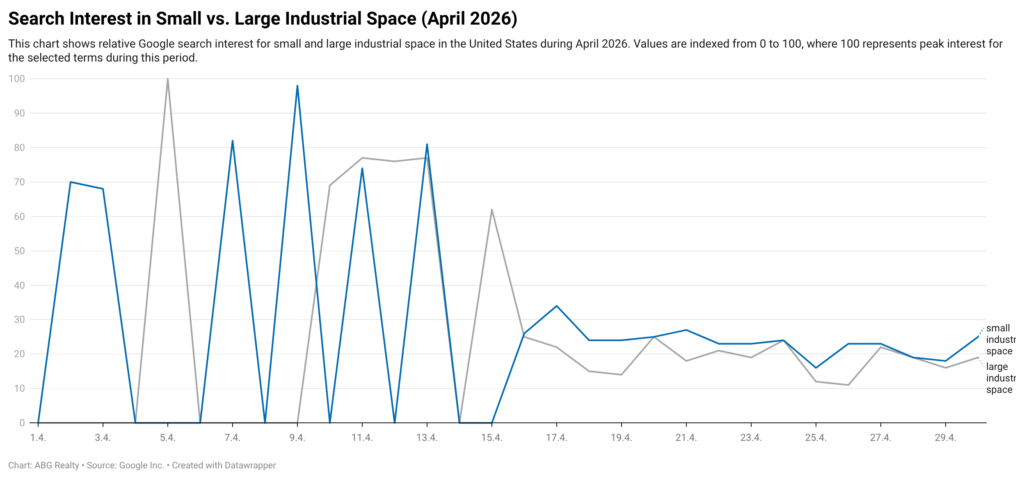
Throughout the month, searches related to small industrial space appeared consistently, with several strong spikes early in April followed by moderate, ongoing activity through the end of the month. This pattern often reflects short decision cycles, where businesses enter the market with a defined need and search intensively before narrowing options. The steady presence of these searches suggests that smaller industrial users frequently rely on online listings as a primary discovery tool and tend to act quickly when the right opportunity appears.
View source data
Search behavior for large industrial space followed a different rhythm. While interest did surface during April, including a notable spike at the beginning of the month, overall activity was less frequent and more episodic. Instead of steady engagement, large‑space searches appeared at specific points and then dropped off, indicating that larger occupiers may be turning to public search at more selective moments in the process.
Another notable takeaway from April is how tenants use language when searching. Exact square‑footage terms showed little to no activity, while broader phrases such as “large industrial space” were more likely to register interest. This suggests a difference in how tenants frame their needs early on. Smaller users tend to search more precisely, while larger users often start with broader categories and refine details later through direct conversations.
These patterns don’t tell the full story of the industrial market, nor are they meant to. Many leases, particularly larger ones, are driven by relationships and broker‑led engagement that never appears in search data. What search behavior does reveal, however, is how tenants initially enter the market and how independently they explore options.
Paying attention to these early signals helps ensure industrial listings are presented clearly and aligned with how tenants actually search. Small‑space users benefit from size‑forward, information‑rich listings that make it easy to evaluate options quickly, while large‑space opportunities are often better supported through broader positioning and direct outreach.
At ABG, understanding how tenants search is part of understanding how they make decisions. By aligning marketing and presentation with real‑world behavior, the path from first search to signed lease becomes more efficient for both clients and brokers alike.